AQA A-Level Biology: Inheritance and Genetic Crosses
A clear revision guide to inheritance for AQA A-Level Biology: genotype and phenotype, alleles, dominant, recessive and codominant, monohybrid and dihybrid crosses, and the chi-squared test.
Inheritance is the passing of alleles from parents to offspring, and genetics is largely about predicting the outcome. This guide sets out the key terms, explains how dominant, recessive and codominant alleles are expressed, and shows how monohybrid and dihybrid crosses predict the ratios of offspring. It ends with the chi-squared test, which checks whether the results you actually get match what you expected. Get the vocabulary firm and the crosses follow easily.
The key vocabulary
Genetics has a precise vocabulary, and using it accurately is half the battle.
- The genotype is the genetic make-up of an organism, the alleles it carries.
- The phenotype is the expression of that genotype, together with its interaction with the environment, so it is the observable characteristics.
- A gene is a section of DNA that codes for a characteristic, and its alleles are different versions of that gene, found at the same position (locus) on a chromosome. New alleles arise by mutation, a change in the base sequence of DNA.
- A diploid organism has two alleles of each gene, one on each of a pair of homologous chromosomes, although across a whole population there may be many more than two alleles of a gene.
- If the two alleles are the same, the organism is homozygous; if they are different, it is heterozygous.
Dominant, recessive and codominant alleles
Alleles differ in how they are expressed when paired with another allele.
- A dominant allele is always expressed in the phenotype, even if only one copy is present.
- A recessive allele is only expressed when two copies are present (homozygous recessive). When a dominant allele is also present, the recessive one is hidden, and the individual is a carrier.
- Codominant alleles are both expressed when inherited together, so both contribute to the phenotype.
By convention a dominant allele is written as a capital letter and a recessive allele as the same letter in lower case, for example A and a. Codominant alleles are usually written as a common capital letter with different superscripts.
Monohybrid crosses
A monohybrid cross looks at the inheritance of one characteristic controlled by a single gene. To predict the offspring you set out the parents' phenotypes and genotypes, work out the possible gametes, and combine them in a Punnett square.
For example, crossing two heterozygous tall plants (Tt × Tt, where tall T is dominant to short t) gives offspring in the ratio 3 tall : 1 short. Crossing a heterozygous individual with a homozygous recessive (Tt × tt) gives a 1 : 1 ratio instead. The same method works with codominance, where the heterozygote shows its own distinct phenotype, and with genes that have multiple alleles, such as the ABO blood groups.
Worked example: a monohybrid cross
In fruit flies, the allele for long wings (L) is dominant to the allele for vestigial wings (l), which are short and non-functional.
Two long-winged flies are crossed. Both are heterozygous.
Draw a genetic diagram to show the expected ratio of phenotypes in the offspring.
| Parental phenotypes | Long wings | Long wings | |||||||||
|---|---|---|---|---|---|---|---|---|---|---|---|
| Parental genotypes | Ll | Ll | |||||||||
| Gamete genotypes | L and l | L and l | |||||||||
| Genetic diagram |
| ||||||||||
| Offspring genotypes | LL, Ll, Ll, ll | ||||||||||
| Offspring phenotypes | Long wings, long wings, long wings, vestigial wings | ||||||||||
| Ratio | 3 long wings : 1 vestigial wings | ||||||||||
Set it out in that order every time, because the marks follow it. The gametes line is the one students skip, and it is where the method is shown: each parent can pass on either of its two alleles, so each produces two kinds of gamete.
Read the square itself as every possible combination, not as four children. A 3 : 1 ratio means each offspring has a 3 in 4 chance of having long wings. It does not mean that four offspring will come out three and one.
Worked example: a cross with multiple alleles
Coat colour in one breed of rabbit is controlled by a gene with three alleles. C gives a full-colour coat, cch gives a chinchilla coat, and c gives an albino coat.
C is dominant to both of the others, and cch is dominant to c.
A full-colour rabbit carrying the albino allele is crossed with a chinchilla rabbit carrying the albino allele.
Use a genetic diagram to give the expected ratio of phenotypes.
| Parental phenotypes | Full colour | Chinchilla | |||||||||
|---|---|---|---|---|---|---|---|---|---|---|---|
| Parental genotypes | Cc | cchc | |||||||||
| Gamete genotypes | C and c | cch and c | |||||||||
| Genetic diagram |
| ||||||||||
| Offspring genotypes | Ccch, Cc, cchc, cc | ||||||||||
| Offspring phenotypes | Full colour, full colour, chinchilla, albino | ||||||||||
| Ratio | 2 full colour : 1 chinchilla : 1 albino | ||||||||||
Three alleles of one gene, but still only two in any one rabbit, and still only one in any one gamete. That is what makes the square the same size as the last one.
The hierarchy does the rest. Ccch is full colour because C is dominant to everything, and cchc is chinchilla because cch is dominant to c. Work down the order of dominance and each genotype has exactly one answer.
Worked example: a cross with codominance
Coat colour in one breed of cattle is controlled by two codominant alleles. CR gives red hairs and CW gives white hairs.
A heterozygous animal has both kinds of hair in its coat, which is called roan, so the heterozygote has a phenotype of its own.
Two roan cattle are crossed. Give the expected ratio of phenotypes in the offspring.
| Parental phenotypes | Roan | Roan | |||||||||
|---|---|---|---|---|---|---|---|---|---|---|---|
| Parental genotypes | CRCW | CRCW | |||||||||
| Gamete genotypes | CR and CW | CR and CW | |||||||||
| Genetic diagram |
| ||||||||||
| Offspring genotypes | CRCR, CRCW, CRCW, CWCW | ||||||||||
| Offspring phenotypes | Red, roan, roan, white | ||||||||||
| Ratio | 1 red : 2 roan : 1 white | ||||||||||
Compare that ratio with the first worked example. The square is filled in exactly the same way, and the genotype ratio is 1 : 2 : 1 in both. What has changed is that the heterozygote now looks like neither parent allele, so the phenotype ratio is 1 : 2 : 1 as well instead of collapsing to 3 : 1.
That is the whole of codominance. Notice the notation too: both alleles get a capital C, with the letter that names the colour raised beside it, because neither is recessive to the other.
Family trees, or pedigree diagrams, are used to trace a characteristic through generations, and they can reveal whether an allele is dominant or recessive.
- An allele is recessive if two parents without the characteristic have a child with it. The parents must each carry a hidden recessive allele.
- An allele is dominant if two parents with the characteristic have a child without it. Both parents must be heterozygous, because if the allele were recessive all of their children would show the characteristic.
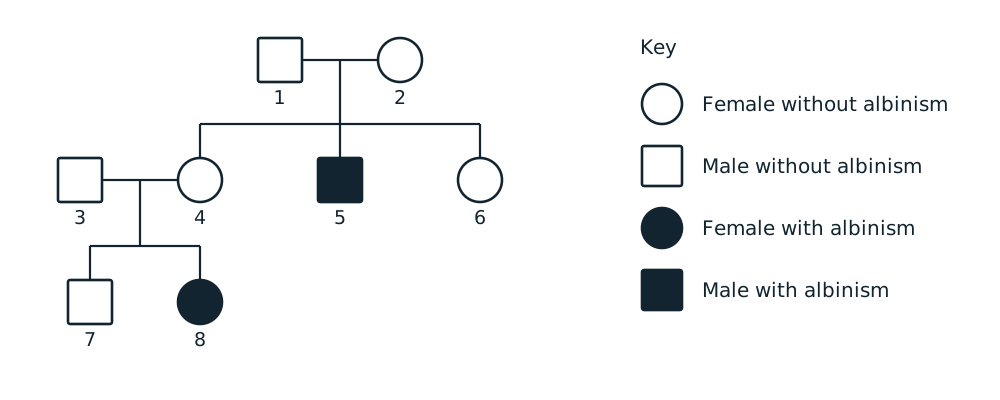
Albinism is caused by a single gene. Use A for the dominant allele and a for the recessive one.
Work through the pedigree in two steps before touching a Punnett square, because the genotypes have to be deduced before they can be used.
Step one: is the allele dominant or recessive? Look at 1 and 2. Neither has albinism, but their son 5 does. If the allele were dominant, one of them would have to show it, so the allele must be recessive. Every affected person on the tree is therefore aa.
Step two: what are the parents' genotypes? 4 does not have albinism, so she has at least one A. But her daughter 8 is aa, and an aa child must get one a from each parent. So 4 is Aa, and 3 must be Aa as well.
Worked example: a monohybrid cross from a pedigree
Individuals 3 and 4 on the family tree above are planning another child.
Both have normal pigmentation, and from step two above both must be heterozygous.
Determine the probability that the child will be a girl with albinism.
| Parental phenotypes | Normal pigmentation | Normal pigmentation | |||||||||
|---|---|---|---|---|---|---|---|---|---|---|---|
| Parental genotypes | Aa | Aa | |||||||||
| Gamete genotypes | A and a | A and a | |||||||||
| Genetic diagram |
| ||||||||||
| Offspring genotypes | AA, Aa, Aa, aa | ||||||||||
| Offspring phenotypes | Normal pigmentation, normal pigmentation, normal pigmentation, albinism | ||||||||||
| Probability | 1 in 4 have albinism, and 1 in 2 are girls, so 1/4 × 1/2 = 1 in 8 | ||||||||||
The last row is where this kind of question is won or lost. The square alone gives 1 in 4, and that is the answer to "probability the child has albinism". The question asked for a girl with albinism, which is a second, independent condition, so the two probabilities are multiplied.
Nothing about sex appears in the square, and it should not: this gene is on an ordinary chromosome, not a sex chromosome. The 1 in 2 comes from sex being decided separately, which is exactly why it is a separate multiplication rather than another row of the grid.
Dihybrid crosses
A dihybrid cross follows two characteristics, controlled by two different genes, at once. Each parent's genotype now has four letters, and each gamete carries one allele of each gene.
Crossing two individuals heterozygous for both genes (for example RrYy × RrYy) produces offspring in the classic ratio 9 : 3 : 3 : 1, provided the two genes are inherited independently. The four groups are the two dominant characteristics together, each dominant with the other recessive, and both recessive.
Work out the gametes first, because that is where a dihybrid cross is won. If the two genes are on different chromosomes they are not linked, so independent segregation in meiosis lets either allele of one gene end up with either allele of the other. An individual that is heterozygous for both genes therefore makes four kinds of gamete, and one that is heterozygous for only one makes two.
Worked example: a dihybrid cross
In pea plants, the allele for round seeds (R) is dominant to the allele for wrinkled seeds (r), and the allele for yellow seeds (Y) is dominant to the allele for green seeds (y).
The two genes are on different chromosomes, so they are not linked.
Two plants, each heterozygous for both genes, are crossed.
Complete the genetic diagram and give the ratio of phenotypes expected in the offspring.
| Parental phenotypes | Round, yellow seeds | Round, yellow seeds | |||||||||||||||||||||||||
|---|---|---|---|---|---|---|---|---|---|---|---|---|---|---|---|---|---|---|---|---|---|---|---|---|---|---|---|
| Parental genotypes | RrYy | RrYy | |||||||||||||||||||||||||
| Gamete genotypes | RY, Ry, rY and ry | RY, Ry, rY and ry | |||||||||||||||||||||||||
| Genetic diagram |
| ||||||||||||||||||||||||||
| Offspring phenotypes | 9 round and yellow, 3 round and green, 3 wrinkled and yellow, 1 wrinkled and green | ||||||||||||||||||||||||||
| Ratio | 9 : 3 : 3 : 1 | ||||||||||||||||||||||||||
Sixteen boxes, but you never count them one by one. Sort them into the four groups instead: a plant is round if it has at least one R, and yellow if it has at least one Y. Count how many boxes have both dominants, then each dominant with the other recessive, then neither.
That is also the quickest check that you have filled it in correctly. Any dihybrid cross between two double heterozygotes with unlinked genes gives 9 : 3 : 3 : 1. If your square gives anything else, the gametes are usually where the mistake is.
Both parents here are heterozygous for both genes, so both make four gametes and the square is four by four. A parent heterozygous for only one of the genes makes only two kinds of gamete, and the square shrinks to match: two columns instead of four, and a different ratio at the end.
Worked example: a dihybrid cross with codominance
In one breed of chicken, feather colour is controlled by two codominant alleles: CB gives black feathers and CW gives white feathers. A heterozygous bird is blue.
A second, unlinked gene controls comb shape. The allele for a rose comb (R) is dominant to the allele for a single comb (r).
A blue bird with a rose comb, heterozygous for comb shape, is crossed with a white bird that is also heterozygous for comb shape.
Complete the genetic diagram and give the ratio of phenotypes expected in the offspring.
| Parental phenotypes | Blue, rose comb | White, rose comb | |||||||||||||||
|---|---|---|---|---|---|---|---|---|---|---|---|---|---|---|---|---|---|
| Parental genotypes | CBCWRr | CWCWRr | |||||||||||||||
| Gamete genotypes | CBR, CBr, CWR and CWr | CWR and CWr | |||||||||||||||
| Genetic diagram |
| ||||||||||||||||
| Offspring phenotypes | Blue with a rose comb, blue with a single comb, white with a rose comb, white with a single comb | ||||||||||||||||
| Ratio | 3 blue rose : 1 blue single : 3 white rose : 1 white single | ||||||||||||||||
Notice that the two parents do not make the same number of gametes. The blue bird is heterozygous for both genes, so it makes four; the white bird is homozygous for colour and heterozygous only for comb, so it makes two. The square is four by two, not four by four.
You can also get that ratio without the square, by treating the genes separately and multiplying. For colour, CBCW × CWCW gives 1 blue : 1 white. For the comb, Rr × Rr gives 3 rose : 1 single. Combine them and you get 3 : 1 : 3 : 1, which is what the eight boxes say. That shortcut is worth knowing as a check, but write the square out when the question asks for a genetic diagram.
The chi-squared test
The ratios above are what you expect. The numbers you actually observe are often a little different, and the chi-squared test decides whether that difference is small enough to be down to chance, or large enough to mean something else is going on.
The test is used when the data are categorical (sorted into groups, such as phenotypes) and you want to compare observed frequencies with expected ones, a test of "goodness of fit". It is calculated as the sum of (O − E)² / E, where O is each observed frequency and E is each expected frequency.
The result is interpreted against a critical value from a table, read off at a probability of p = 0.05 and using the degrees of freedom (the number of categories minus one).
- If the chi-squared value is greater than the critical value, the difference is significant: there is less than a 5% probability it is due to chance, so the null hypothesis (that there is no significant difference from the expected ratio) is rejected.
- If it is less than the critical value, the difference is not significant: it is likely due to chance, and the null hypothesis is accepted.
Observed ratios often differ from expected ones for good reasons: fertilisation is random, the sample may be small and so unrepresentative, some genotypes may be lethal, and factors such as linkage, epistasis or sex linkage can distort the ratios.
How this fits together
The whole of basic genetics rests on this framework: alleles at a locus, expressed according to dominance, recombined at random in crosses to give predictable ratios, and checked against reality with chi-squared. Those neat ratios assume genes are inherited independently, but they are not always, and the sex linkage, autosomal linkage and epistasis guide explains what happens when they are not.