AQA GCSE Biology: Vaccination
A clear GCSE Biology revision guide to vaccination: how a vaccine makes you immune, how it reduces the spread of disease, and the antibody response after vaccination.
Vaccination protects people from disease by preparing the immune system in advance. This guide explains how a vaccine makes a person immune, how vaccinating a population reduces the spread of a disease, and what the antibody response looks like. It builds directly on memory cells from the human defence systems guide.
How a vaccine makes you immune
A vaccine trains the immune system without making you ill.
- Small quantities of dead or inactive forms of a pathogen are put into the body.
- The antigens on the pathogen stimulate white blood cells to produce specific antibodies.
- Memory cells are formed and stay in the body.
- If the same pathogen enters later, the memory cells respond quickly, producing the correct antibodies in large amounts, so the pathogen is destroyed before its numbers are high enough to cause disease.
How vaccination reduces the spread of disease
Vaccination protects whole populations, not just individuals.
If a large proportion of the population is vaccinated, most people are immune and do not become ill. This means there are fewer infected people to pass the pathogen on, and unvaccinated people are much less likely to come into contact with someone who has the disease. This protection of the whole population is sometimes called herd immunity.
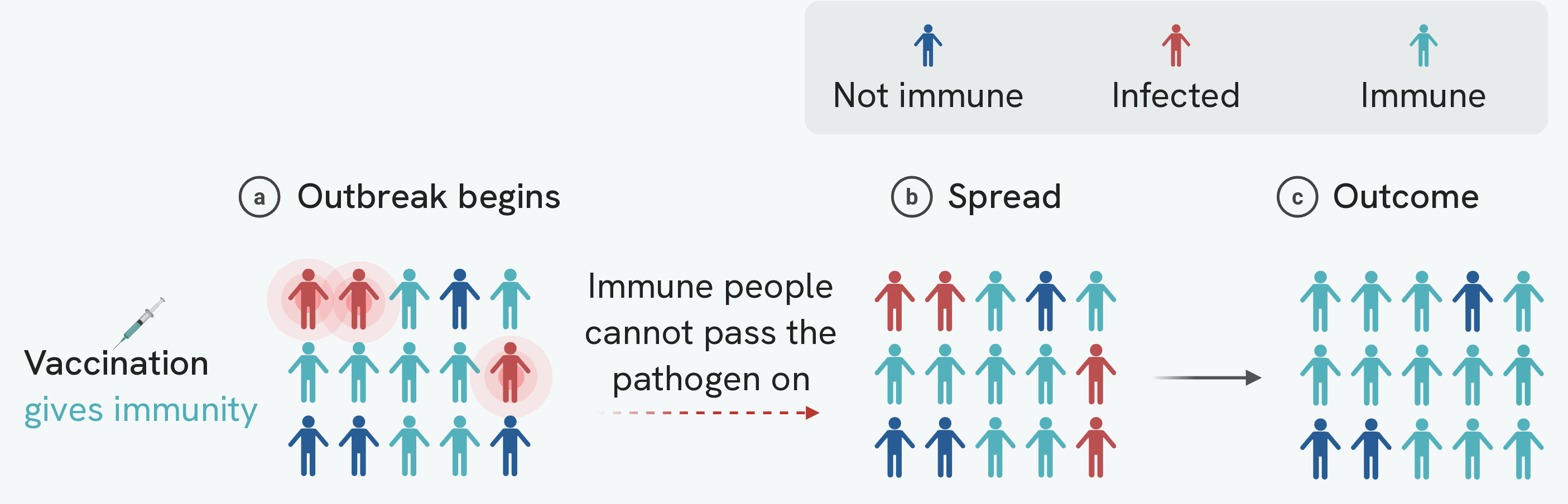
Count the colours across the three panels rather than following any one person. Every immune person is a dead end for the pathogen: an immune person who meets the pathogen does not become ill, and so never passes the pathogen on.
That is why the three people who are not immune are still well in the last panel. Nothing protected them directly. They were protected because there were fewer infected people near them to catch the disease from. When a question asks why unvaccinated people are less likely to catch a disease in a highly vaccinated population, that is the answer it wants, and both halves earn credit: most people are immune, so there are fewer infected people to pass the pathogen on.
The antibody response
If you compare the antibody response after vaccination with the response after a later infection by the same pathogen, the second response is far stronger. After the real infection:
- more antibodies are produced;
- the rise in antibodies starts sooner;
- antibodies are produced faster;
- and the level stays high for longer.
This is because the memory cells made during vaccination allow a rapid, large secondary response.
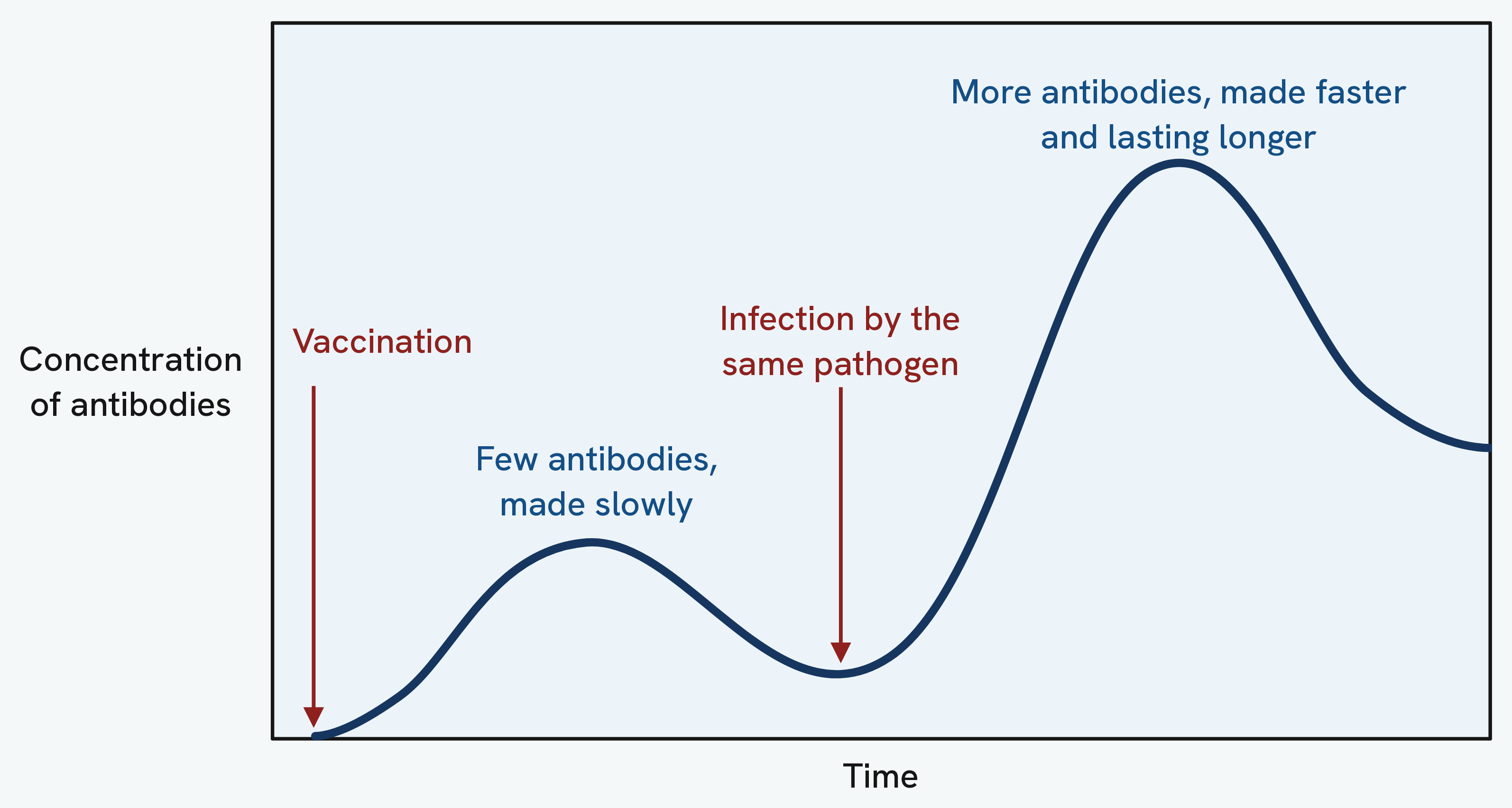
Three of those four comparisons are written on the graph. The fourth, that the rise starts sooner, is a shape rather than a quantity: after the vaccination the line stays almost flat for a while before it climbs, and after the infection it turns upwards straight away.
Neither axis carries numbers, and that is deliberate. A question on a graph like this wants a comparison, so write that the second response is higher, faster and longer lasting rather than trying to read values off it.
How this fits together
Vaccines prevent disease. Once someone is already ill, other medicines are used to treat them, which is the subject of the medicines and drug development guide.