AQA A-Level Biology: Carbohydrates
A clear revision guide to carbohydrates for AQA A-Level Biology: alpha and beta glucose, glycosidic bonds, starch, glycogen and cellulose, and the Benedict's and iodine tests.
Carbohydrates are made from carbon, hydrogen and oxygen, and they are the body's most accessible source of energy. This guide covers the single sugars, the bonds that join them, the three polysaccharides you need, and the tests that identify them. The idea running through it is that one small difference between two forms of glucose decides everything the polymer can do.
Monosaccharides
Monosaccharides are the single sugar units, the monomers of carbohydrates. Glucose matters most, because it is the main substrate for respiration. Two others are named in the specification: fructose, found in fruit, and galactose, found in milk.
Glucose exists in two ring forms, alpha glucose and beta glucose. They differ in one respect only: the position of the hydroxyl group on carbon 1. In alpha glucose it points below the ring; in beta glucose it points above it.


That one difference is worth dwelling on, because it is the reason starch and cellulose behave nothing like each other despite both being chains of glucose.
Disaccharides
Two monosaccharides join by a condensation reaction, releasing water and forming a glycosidic bond. The result is a disaccharide.
| Disaccharide | Made from |
|---|---|
| Maltose | Glucose + glucose |
| Sucrose | Glucose + fructose |
| Lactose | Glucose + galactose |
The bond is usually described by the carbons it joins. A bond between carbon 1 of one sugar and carbon 4 of the next is a 1,4-glycosidic bond, and it is the bond that makes straight chains. A bond to carbon 6 instead makes a 1,6-glycosidic bond, which is how a chain branches.
Polysaccharides
Joining many monosaccharides gives a polysaccharide. Three matter, and the job of each comes directly from its structure.
| Polysaccharide | Made from | Structure | Role |
|---|---|---|---|
| Starch | Alpha glucose | Coiled and branched chains | Energy store in plants |
| Glycogen | Alpha glucose | Highly branched chains | Energy store in animals |
| Cellulose | Beta glucose | Straight chains held by hydrogen bonds | Structural support in plant cell walls |
Starch and glycogen
Starch is not one molecule but two. Amylose is an unbranched chain of alpha glucose joined by 1,4-glycosidic bonds, which coils into a tight helix and is therefore compact. Amylopectin has 1,6 bonds as well, so it branches. Glycogen, the animal equivalent, is built like amylopectin but branches far more often.
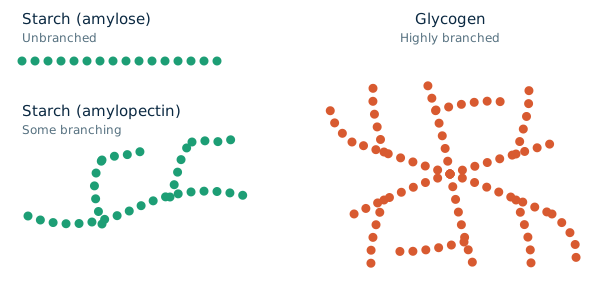
Branching is the point. Glucose can only be removed from the end of a chain, so a molecule with many branches has many ends, and glucose can be released from all of them at once. That is why glycogen suits animals, which need glucose quickly and in quantity.
Both are also good stores for two reasons the mark scheme wants stated separately. They are insoluble, so they do not affect the water potential of the cell and water is not drawn in by osmosis. And they are compact, so a large amount of glucose is stored in a small space.
Cellulose
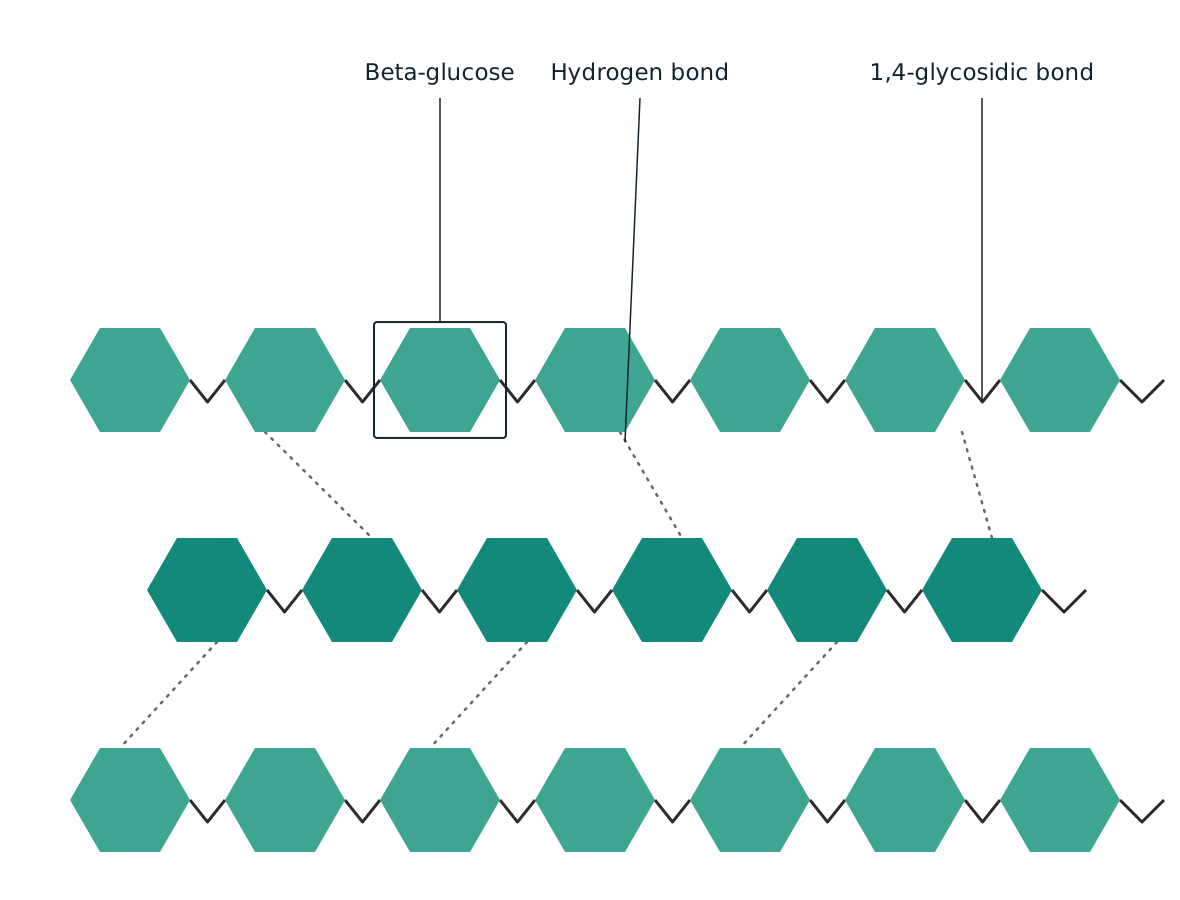
Cellulose is built from beta glucose, and that changes everything. To form a 1,4 bond between beta glucose molecules, every alternate molecule must be rotated 180 degrees. The chain that results cannot coil, so it lies straight.
Many straight chains then lie side by side, held together by hydrogen bonds between them. Each hydrogen bond is weak, but there are a great many of them, and together they bundle the chains into strong microfibrils. This is what gives a plant cell wall the strength to resist the pressure of water pushing outwards.
Testing for sugars and starch
Reducing sugars
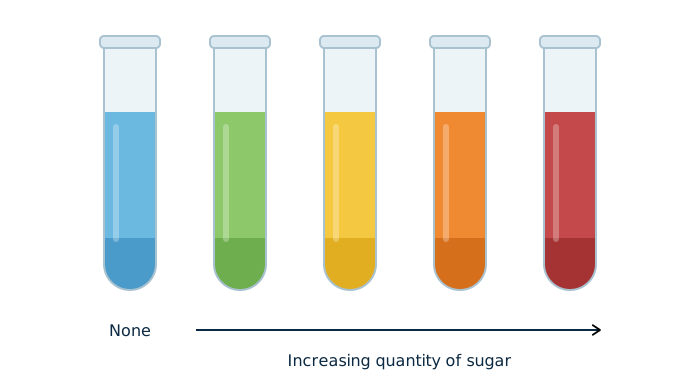
Reducing sugars include all monosaccharides and some disaccharides, such as maltose. Add Benedict's reagent and heat in a water bath. If a reducing sugar is present the blue reagent produces a brick-red precipitate.
The colour reached tells you roughly how much sugar there was, running from blue through green, yellow and orange to brick red as the concentration rises. This makes the test semi-quantitative: it compares samples, but it does not measure them.
Non-reducing sugars
A non-reducing sugar, such as sucrose, gives no colour change with Benedict's. To test for one, work through the steps in order:
- Do the Benedict's test first and confirm it stays blue, so you know no reducing sugar is present.
- Boil a fresh sample with dilute hydrochloric acid, which hydrolyses the disaccharide into its monosaccharides.
- Neutralise with sodium hydrogencarbonate. Benedict's reagent does not work in acid.
- Heat with Benedict's reagent again. A brick-red precipitate now means a non-reducing sugar was present.
Leaving out the neutralising step is the usual way to lose the mark.
Starch
Starch is tested with iodine solution, which is iodine dissolved in potassium iodide. It turns from orange-brown to blue-black if starch is present.
How this fits together
Carbohydrates show the pattern at its clearest: the same monomer in two forms gives a store in one case and a structure in the other. The next group does not form polymers at all, and yet uses the same condensation reaction to build them, in the lipids guide.