AQA A-Level Biology: Enzymes
A clear revision guide to enzymes for AQA A-Level Biology: how enzymes work, the induced fit model, and how temperature, pH and concentration affect the rate of reaction.
Enzymes are the proteins that make life fast enough to happen. Almost every reaction in a living organism is controlled by an enzyme, so understanding how they work unlocks a large part of the whole specification. This guide explains what enzymes do and why the conditions around them matter.
What enzymes are
An enzyme is a biological catalyst: it speeds up a reaction without being used up, so a single enzyme molecule can be used again and again. Enzymes work by lowering the activation energy of a reaction, the energy barrier that reactants must overcome before they can change into products. By lowering that barrier, enzymes let reactions happen quickly at the relatively low temperatures found inside cells.
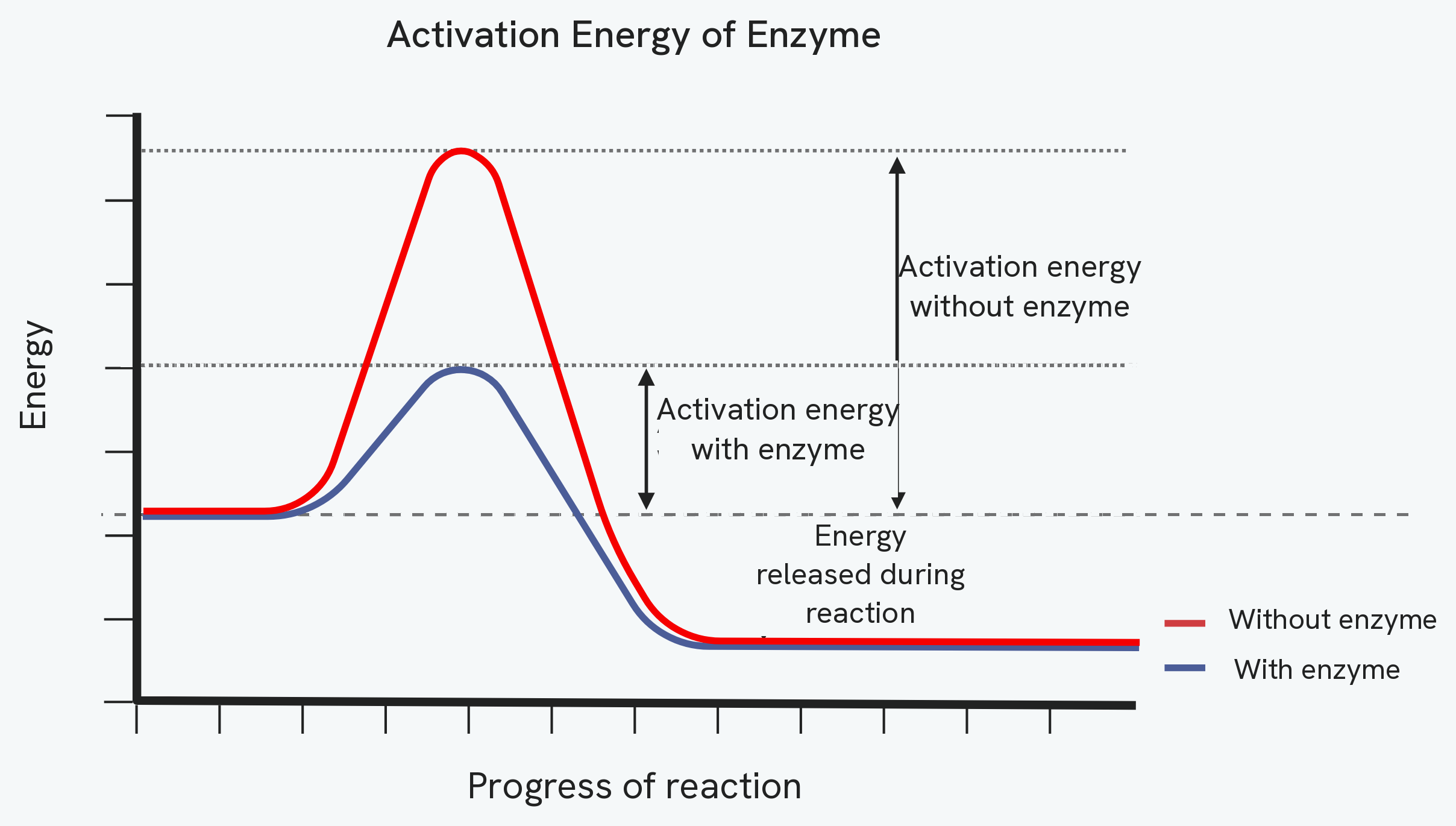
Enzymes are globular proteins, and like all proteins their function depends on their three-dimensional shape. That shape is the reason each enzyme is so particular about which reaction it will catalyse.
The active site and specificity
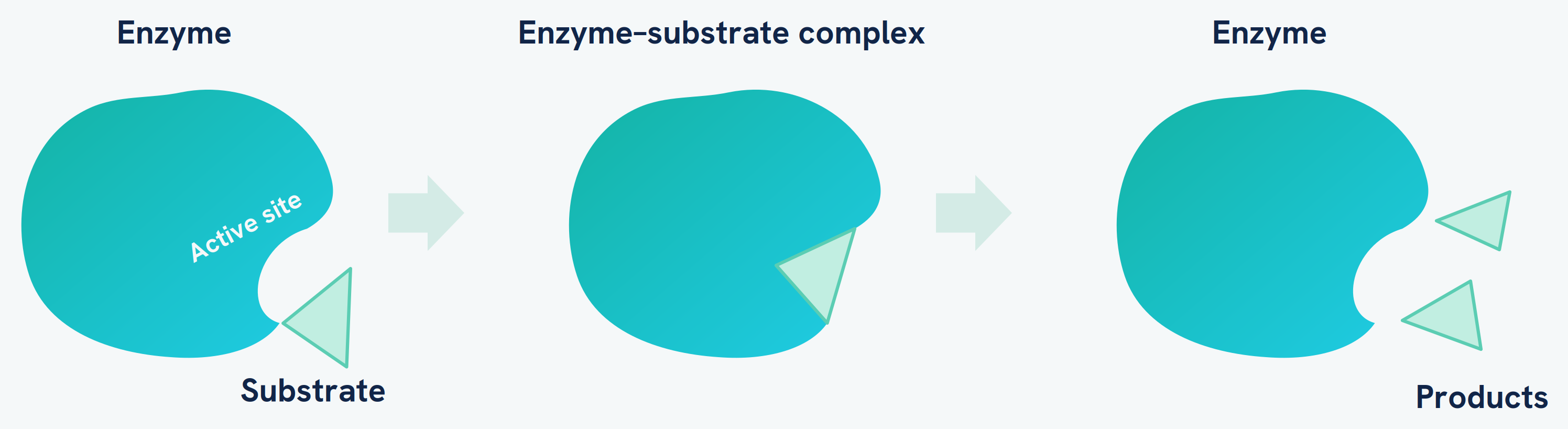
Each enzyme has a region called the active site, a groove with a shape that matches one particular substrate. Because the active site fits only its substrate, an enzyme is specific: it catalyses one reaction and not others.
An early explanation, the lock and key model, imagined the substrate fitting a rigid active site like a key in a lock. The accepted model today is the induced fit model. Here the active site is not a perfect fit at first. As the substrate enters, the active site changes shape slightly to mould around it, forming an enzyme-substrate complex. This closer fit puts strain on the bonds in the substrate and helps them break or form, which is how the activation energy is lowered.
What affects the rate of reaction
Because enzyme activity depends on shape and on collisions between enzyme and substrate, anything that changes those things changes the rate.
Temperature
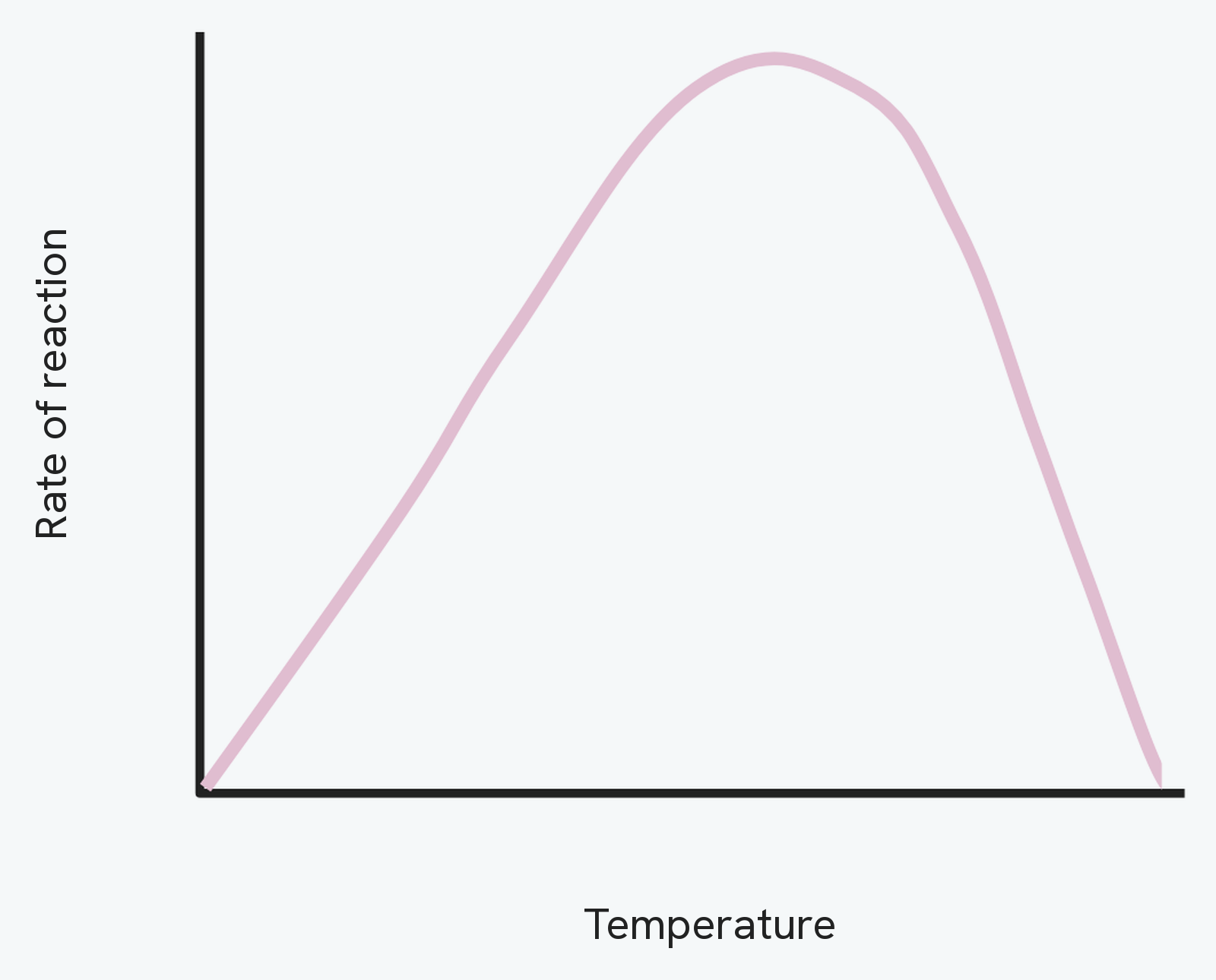
As temperature rises, molecules gain kinetic energy and move faster, so enzyme and substrate collide more often and the rate increases. This continues only up to a point. Above the enzyme's optimum, the extra energy breaks the hydrogen bonds and other bonds that hold the tertiary structure together. The active site loses its shape, the substrate no longer fits, and the enzyme is denatured. Denaturation is not the same as slowing down: it is a permanent change to the enzyme's structure.
pH
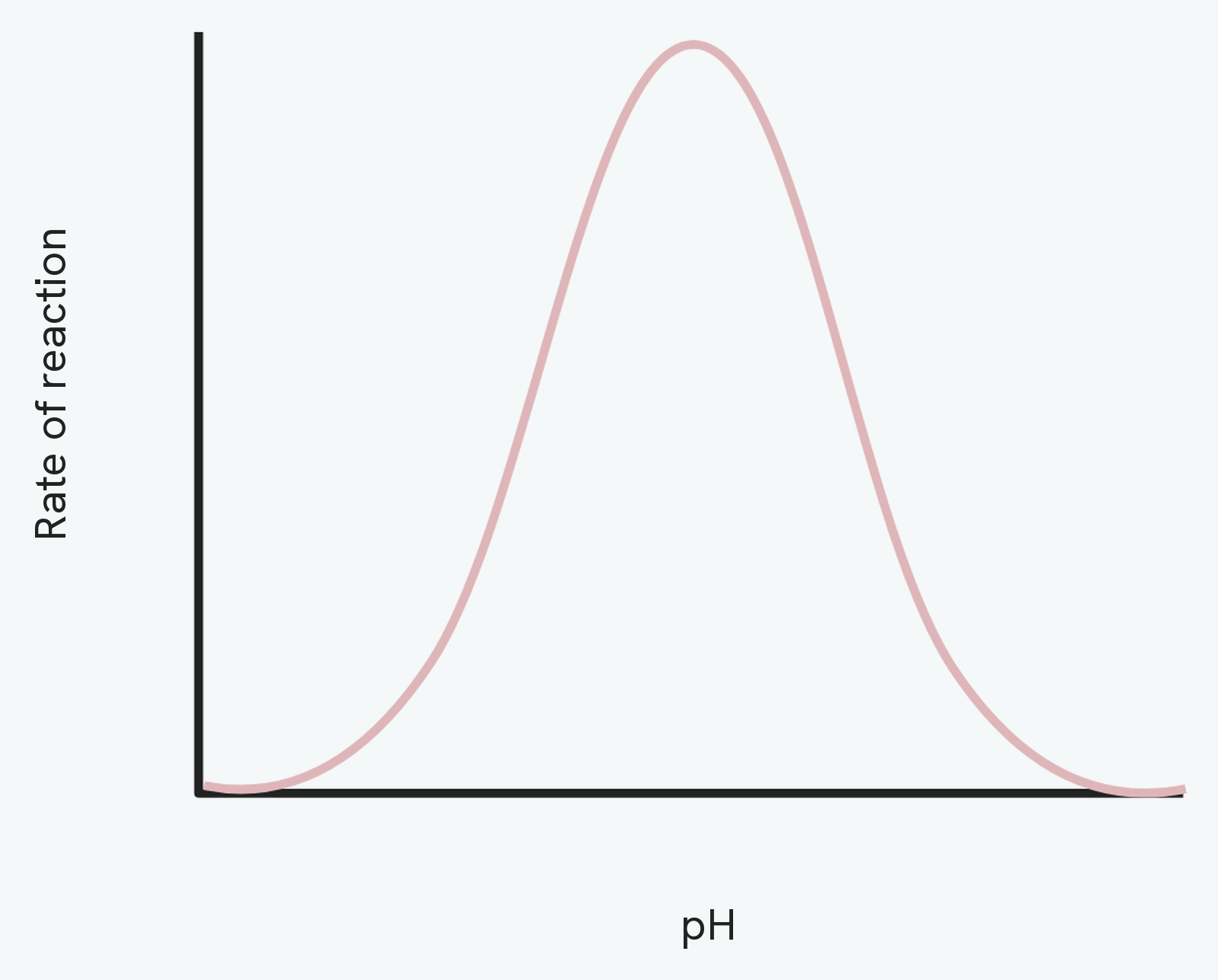
Every enzyme has an optimum pH at which its active site is the right shape. Moving away from that pH changes the charges on groups in the active site and can break the bonds that hold the tertiary structure, again changing the shape of the active site and reducing activity. Far enough from the optimum, the enzyme denatures.
Substrate concentration
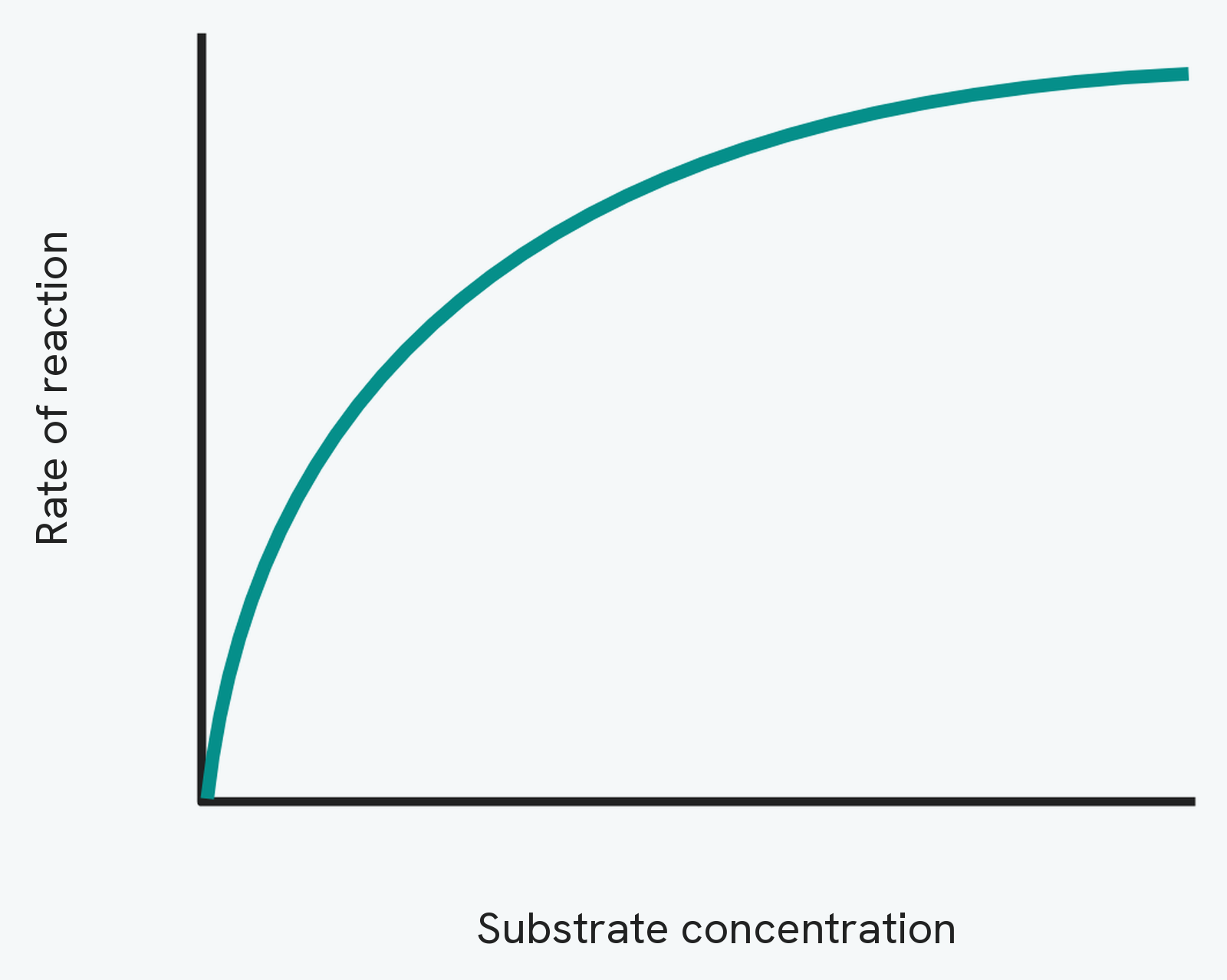
At low substrate concentration, adding more substrate increases the rate, because more active sites are being used at any moment. Eventually every active site is occupied as soon as it is free. At this point the enzymes are the limiting factor, and adding more substrate makes no further difference. The rate has reached its maximum.
Enzyme concentration
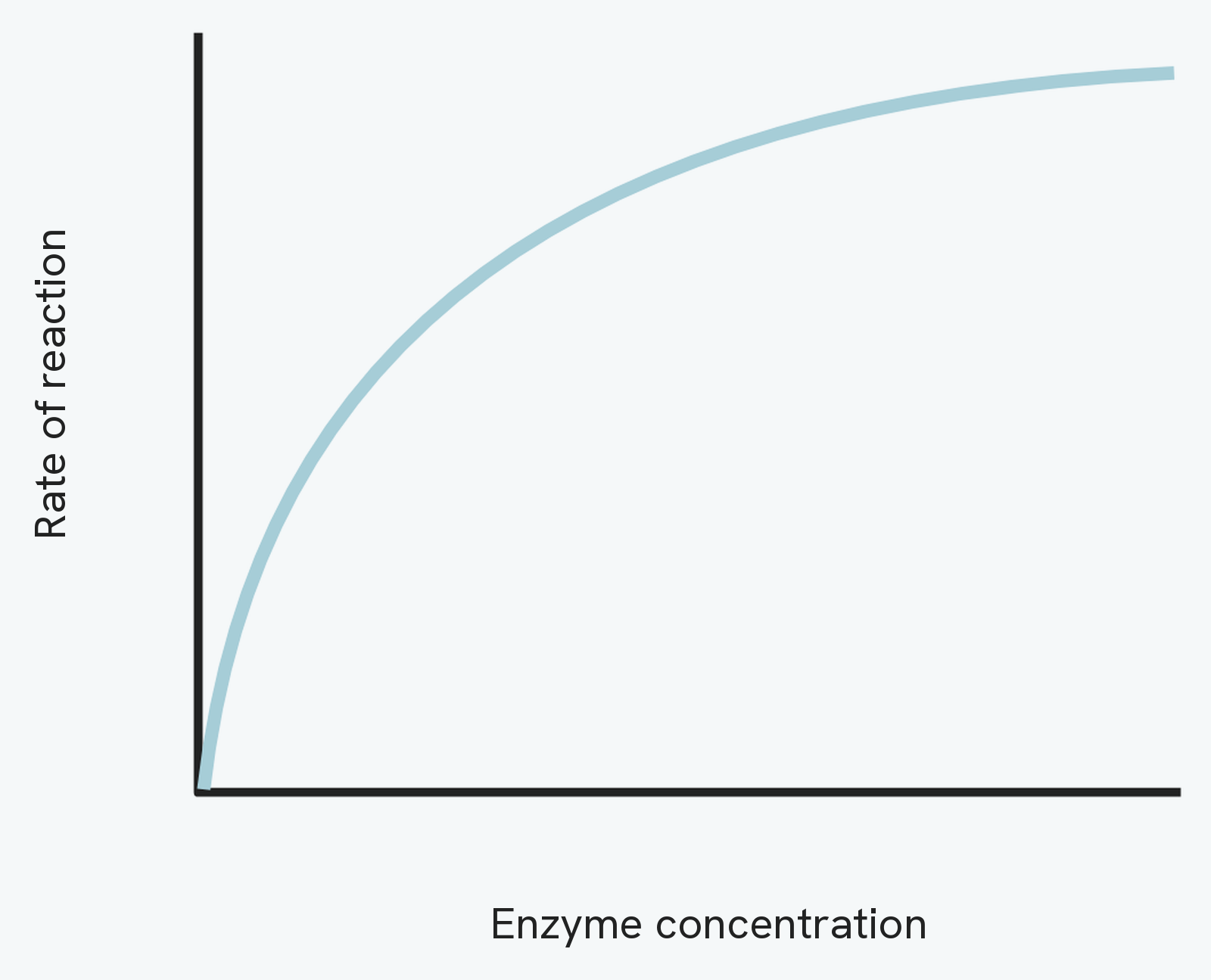
If there is plenty of substrate, adding more enzyme provides more active sites, so the rate increases. If substrate runs short, enzyme concentration stops being the limiting factor and the rate levels off.
Enzyme inhibition
Inhibitors are molecules that reduce the activity of an enzyme, and they work in two main ways.
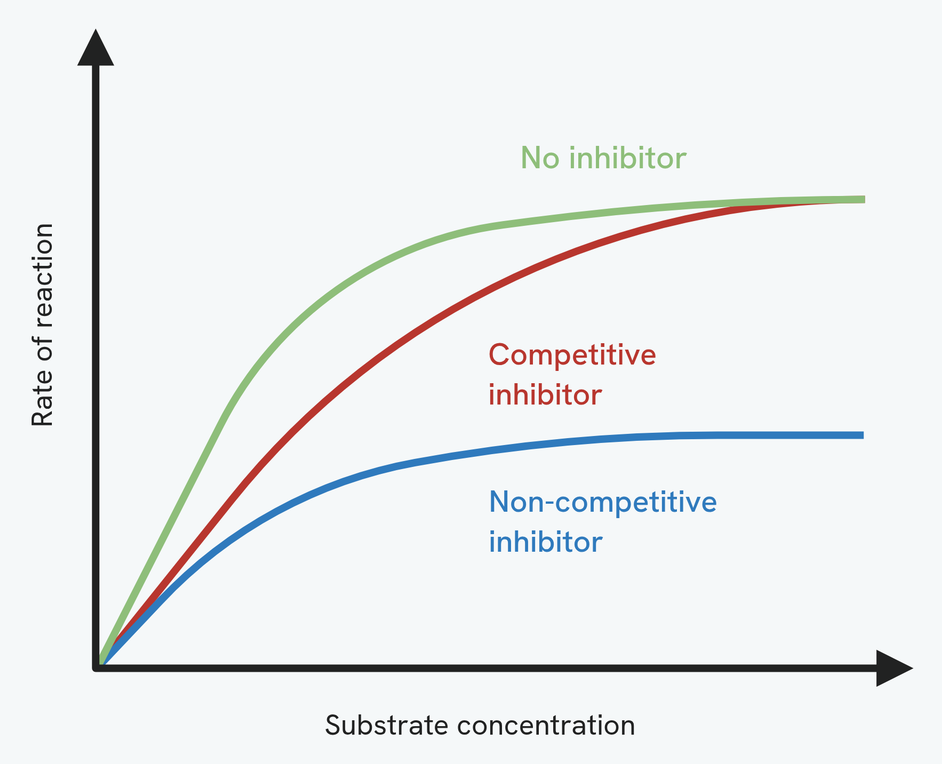
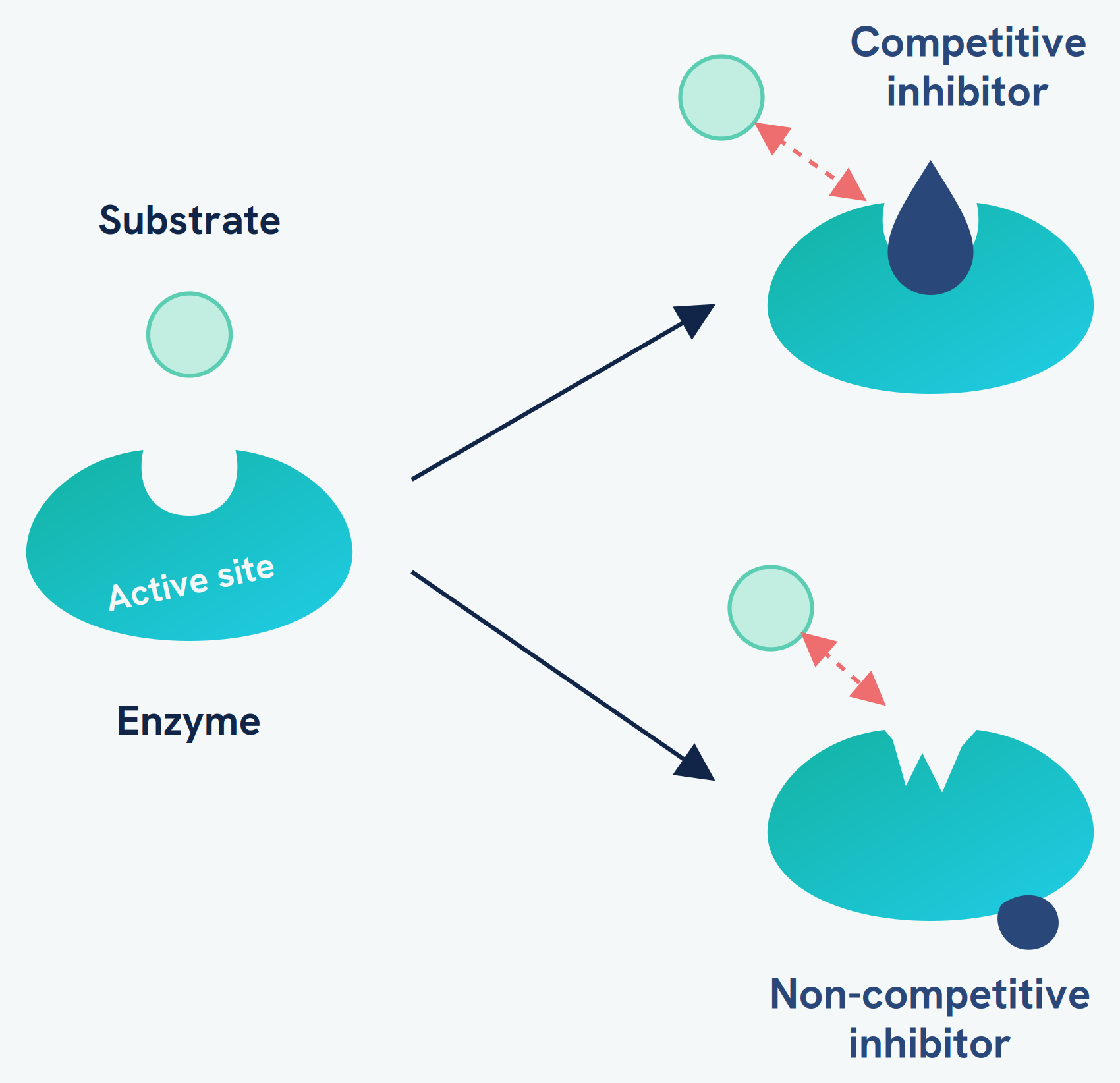
- A competitive inhibitor has a shape similar to the substrate, so it fits into the active site and blocks the substrate from entering. Because it competes for the same site, its effect can be reduced by adding more substrate.
- A non-competitive inhibitor binds to a different part of the enzyme. This changes the shape of the active site so the substrate no longer fits, and adding more substrate does not overcome it.
The thread that ties it together
Every one of these ideas comes back to shape. An enzyme works because its active site fits its substrate, and everything that changes the rate does so by changing how often enzyme and substrate meet or by changing the shape of the active site itself. Keep the shape in mind and enzyme questions become far more predictable.
For the wider context on the molecules enzymes are built from, see the proteins guide.