AQA A-Level Biology: In Vivo Cloning and Gene Technology Applications
A clear revision guide for AQA A-Level Biology to in vivo gene cloning and its applications: vectors, restriction enzymes and ligase, marker genes, transformation, uses in medicine and agriculture, and gene therapy.
Once a gene has been isolated and copied, the next step is to put it into a living organism and get it working, which is called in vivo cloning. This guide explains how a gene is inserted into a vector and transferred into host cells, how the modified cells are identified, and what the technology is used for, from insulin production to gene therapy. It ends with the arguments for and against. The key idea is getting a gene into a cell and expressed.
Amplifying DNA in vivo
In in vivo cloning, the gene is copied inside living cells rather than in a test tube. The process has several stages.
- Promoter and terminator regions are added to the DNA fragment.
- The fragment, along with a marker gene, is inserted into a vector, such as a plasmid, using restriction enzymes and ligase.
- The vectors are used to transform host cells, such as bacteria.
- The transformed cells are identified using the marker gene.
- These cells are cultured so they divide and form clones, each carrying the gene. The DNA can then be extracted, or the cells can be left to make the protein the gene codes for.
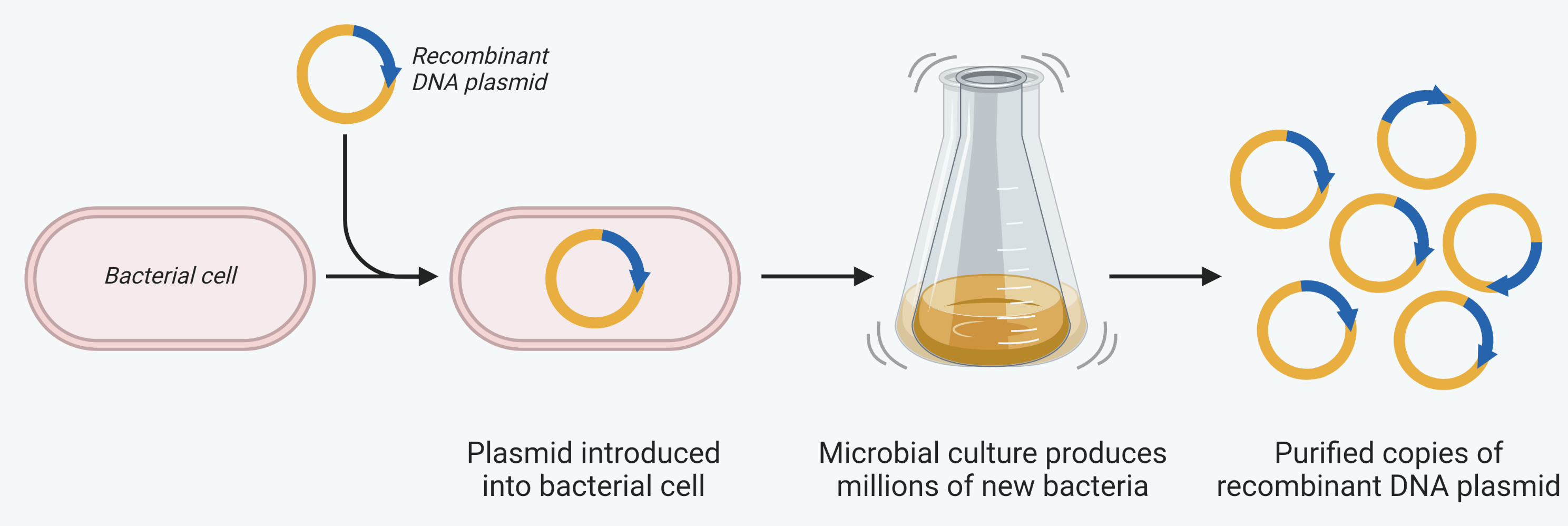
The copying is done by the bacteria dividing, not by any enzyme added to a tube. That is the whole difference between in vivo and in vitro: here one cell becomes millions, and every one of them carries the plasmid, so the gene is copied millions of times as a by-product of ordinary growth.
It is also why in vivo cloning gives you a choice at the end. Extract the plasmids and you have the DNA; leave the culture growing and you have the protein the gene codes for. PCR can only ever give you the first.
Vectors, enzymes and getting the gene in
A vector is something that carries the DNA into the host cell, usually a plasmid or a virus (bacteriophage). Two enzymes are used to insert the gene into the vector.
- A restriction endonuclease cuts open the vector's DNA. Crucially, the same enzyme is used as the one that cut out the gene, so the vector and the fragment have complementary sticky ends that pair up.
- DNA ligase then joins the fragment into the vector, forming phosphodiester bonds between the adjacent nucleotides.
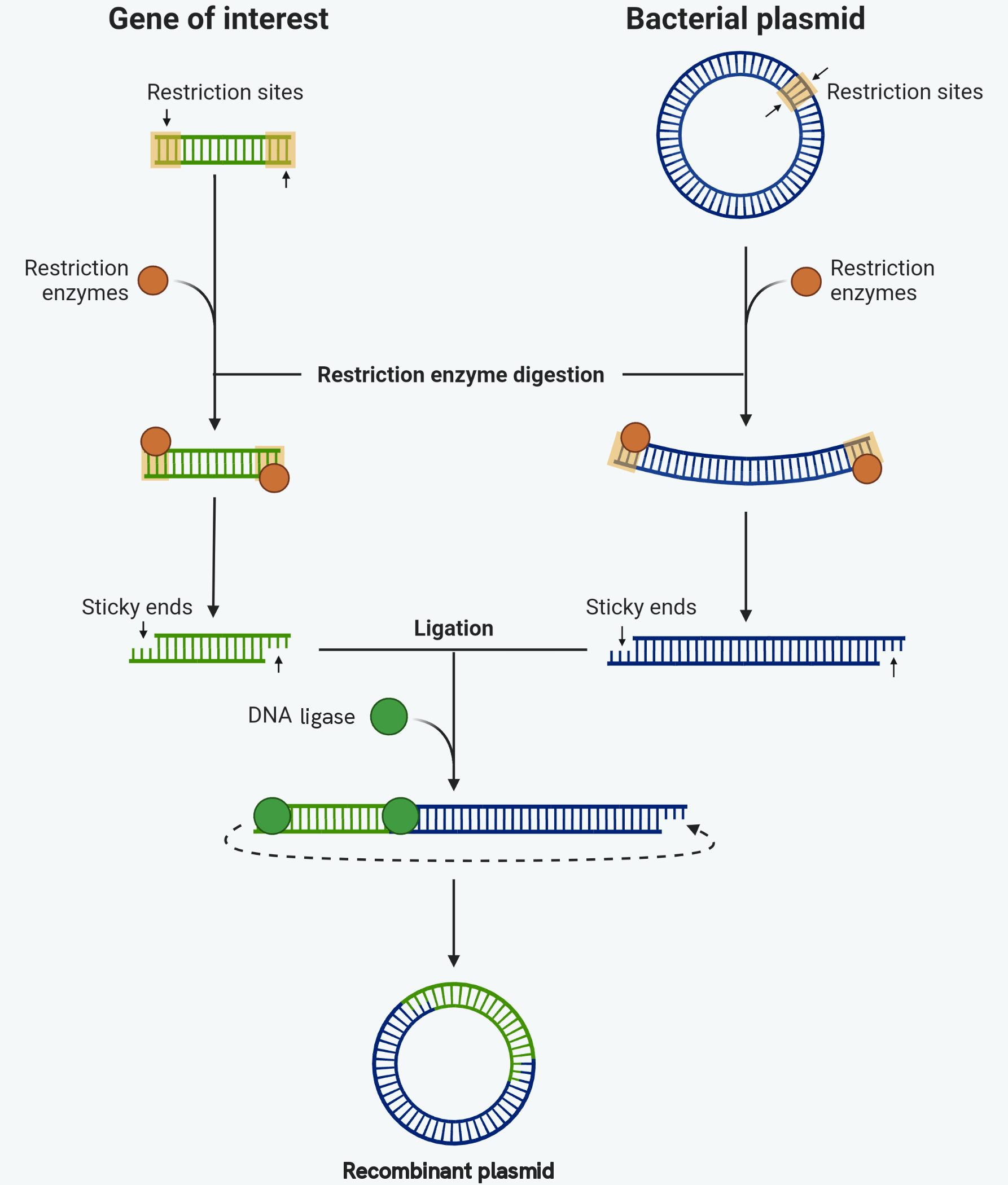
Note that the same restriction enzyme cuts both sides of the figure. That is not an accident of the drawing: it is what makes the sticky ends on the gene complementary to the sticky ends on the plasmid, so the two will pair up at all.
The word at the bottom is worth being careful with. The plasmid with the gene in it is recombinant. Transformation is what happens next, when that plasmid gets into a bacterium, so a transformed cell and a recombinant plasmid are two different things and questions do ask for them separately.
The vectors then enter the host cells. Plasmids are taken up by bacteria after heat shock in a calcium ion solution, which makes the membrane more permeable. Viruses inject their DNA into the host cell, where it is integrated into the host's own DNA.
The promoter and terminator regions added earlier are essential for expression. The promoter allows transcription to start, by letting RNA polymerase bind, and can be chosen so the gene is expressed only in a particular cell type (for example, only in a mammal's mammary gland cells, so the protein is easy to harvest from milk). The terminator makes transcription stop at the end of the gene.
Marker genes
Not every cell takes up the vector, so a marker gene is included to tell the transformed cells apart from the rest.
- If the marker gene codes for antibiotic resistance, the cells are grown with the antibiotic, and only the transformed cells survive.
- If the marker gene codes for a fluorescent protein, the transformed cells glow under UV light.
Uses of recombinant DNA technology
The technology has wide applications.
- Medicine: genetically modified bacteria produce human proteins such as insulin for type 1 diabetes, which is more ethical and less likely to cause allergic reactions than animal insulin. Modified animals and plants can produce pharmaceuticals ("pharming") more cheaply, and gene therapy treats genetic disorders.
- Agriculture: crops can be made resistant to herbicides (so only weeds die when sprayed), resistant to insects (reducing insecticide use), or given added nutritional value (such as golden rice, which carries a precursor of vitamin A). Animals can be modified to grow faster.
- Industry: modified bacteria produce enzymes for industrial and food processes.
Gene therapy
Gene therapy is the introduction of new DNA, usually containing healthy alleles, into a patient's cells to overcome the effect of faulty alleles in a genetic disorder such as cystic fibrosis. Altering body cells produces changes that are not heritable; altering gametes is currently illegal.
Gene therapy has problems. Its effect is often short-lived, because modified cells have a limited lifespan, so treatment must be repeated; the immune system may attack the modified cells or the viral vectors; the long-term effects are unknown and could include cancer; and the new DNA may insert into and disrupt other genes.
Weighing the technology
Recombinant DNA technology is debated. Humanitarians may support it because GM crops raise yields and reduce famine, gene therapy could cure genetic disorders, and pharming makes medicines cheaper and more widely available. Environmentalists and anti-globalisation activists may oppose it because modified genes could spread to wild plants, creating herbicide-resistant "superweeds"; it could harm food webs and reduce biodiversity, for example by affecting wild insects; and large biotechnology companies may control the technology through patents. Judging it means weighing these ethical, financial and social issues against one another.
How this fits together
In vivo cloning turns an isolated gene into a working, protein-making cell or organism, with far-reaching uses and real controversies. The same enzymes and techniques used here, restriction enzymes, PCR and DNA probes, are also used to read and compare DNA between individuals, which is the subject of the DNA probes and genetic screening guide.