AQA GCSE Biology: Contraception and Fertility Treatment
A clear GCSE Biology revision guide to controlling fertility: hormonal and non-hormonal contraception, and fertility treatments including fertility drugs and IVF.
The reproductive hormones can be used both to prevent pregnancy and to help people who are struggling to conceive. This guide covers the hormonal and non-hormonal methods of contraception, and then the Higher-tier fertility treatments. The link to hold onto is that FSH and LH control egg maturation and ovulation, so most methods work by affecting them.
Hormonal contraception
Hormonal methods use hormones such as oestrogen and progesterone to inhibit FSH and LH from the pituitary gland. Without FSH, eggs do not mature in the ovaries; without the LH surge, ovulation does not happen.
These methods include the oral contraceptive pill, injections, implants, skin patches and the hormonal intrauterine device (IUD).
Non-hormonal contraception
Non-hormonal methods work in other ways.
- Barrier methods (condoms, diaphragms) physically stop sperm reaching the egg.
- The copper IUD prevents an embryo implanting in the uterus wall.
- Spermicides are chemicals that kill or disable sperm.
- Abstinence means avoiding intercourse when an egg may be present.
- Surgical sterilisation ties or cuts the sperm ducts in males, or the oviducts in females.
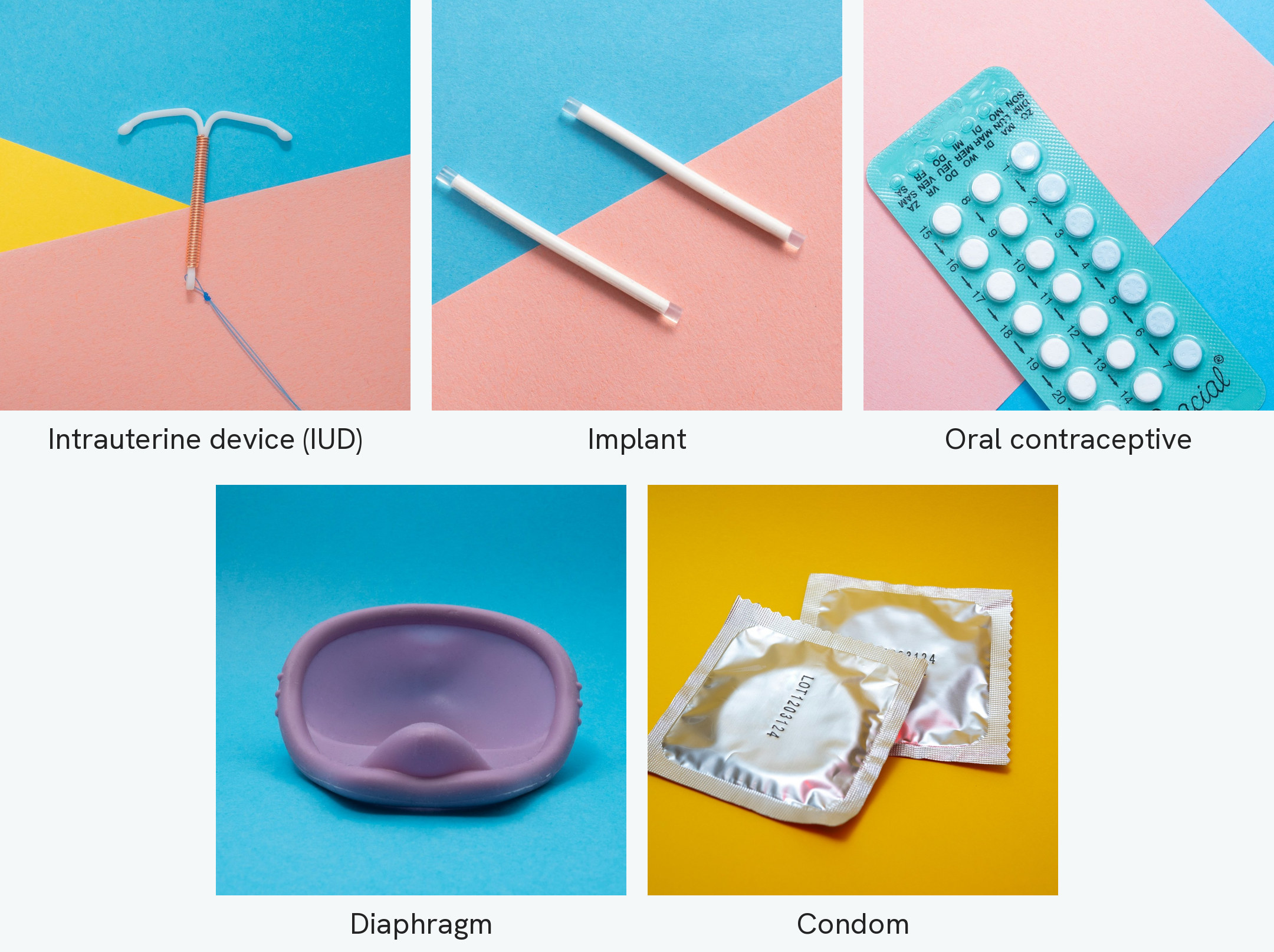
Sort these five by how they work rather than by what they look like. The implant and the oral contraceptive are hormonal: they inhibit FSH and LH, so no egg matures and none is released. The diaphragm and the condom are barrier methods, physically keeping sperm from the egg. The device photographed above is a copper IUD, which is non-hormonal — the copper stops an embryo implanting — but be careful here, because the hormonal IUD looks almost identical and belongs in the first group.
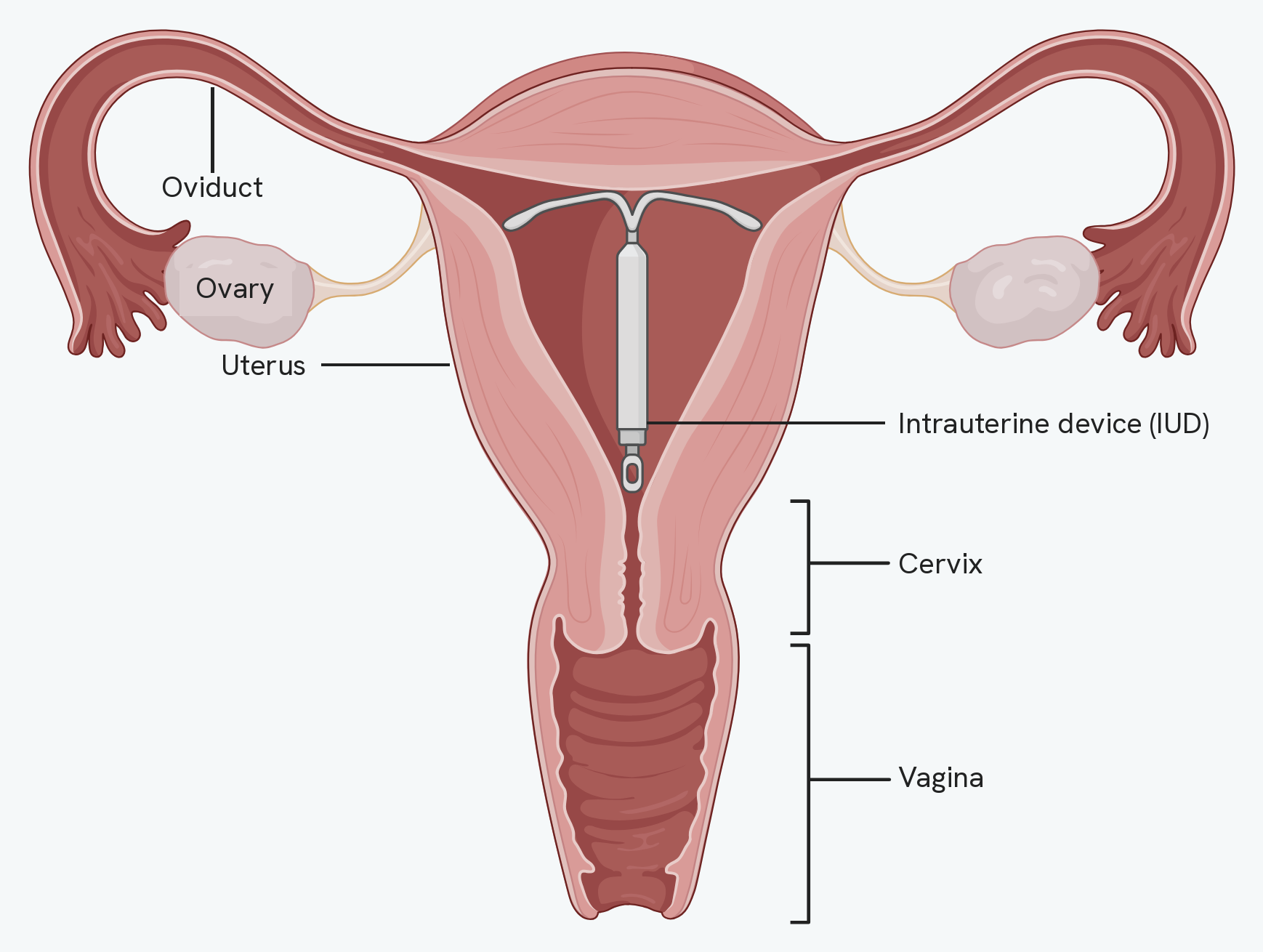
The device is small, and the whole of it sits inside the uterus, with its threads hanging down through the cervix. Both kinds are fitted in this same position, and the difference between them is only what they release: the copper IUD releases copper, which stops an embryo implanting in the lining of the uterus, and the hormonal IUD releases progesterone.
The oviducts are the tubes labelled here, one running from each ovary to the uterus. They are what is cut or tied in female sterilisation, which is why that method is permanent: an egg released from the ovary can no longer reach the uterus.
Fertility treatment
(This section is Higher tier only.) Hormones can also be used to increase fertility.
Fertility drugs contain FSH (to stimulate eggs to mature) and LH (to stimulate ovulation). With more eggs released, the chance of fertilisation rises.
In vitro fertilisation (IVF) is used when this is not enough.
- The mother is given FSH and LH to mature several eggs at once.
- The mature eggs are collected from her ovaries.
- The eggs are fertilised by sperm in a laboratory dish.
- The fertilised eggs develop into embryos.
- When each embryo is a tiny ball of cells, one or two are inserted into the mother's uterus, where they may implant.
IVF has drawbacks: it is emotionally and physically stressful, success rates are low so several cycles may be needed, and it can lead to multiple births, which carry risks for the mother and babies. Set against this, it gives people the chance of a biological child of their own.
How this fits together
Contraception and fertility treatment show hormones being used deliberately. The last part of the human section looks at two more hormones, adrenaline and thyroxine, and the negative feedback that controls them, in the adrenaline, thyroxine and negative feedback guide.