AQA GCSE Biology: Cell Structure
A clear GCSE Biology revision guide to cell structure: eukaryotic and prokaryotic cells, the sub-cellular structures in animal and plant cells, and orders of magnitude.
Cells are the building blocks of every living thing. This guide explains the two main types of cell, the parts inside animal and plant cells and what each one does, and how we compare the very different sizes of cells using orders of magnitude. Getting the parts and their jobs firm here makes the rest of cell biology much easier.
Eukaryotic and prokaryotic cells
All living things are made of one of two types of cell.
- Eukaryotic cells keep their genetic material (DNA) inside a nucleus. Animal and plant cells are eukaryotic.
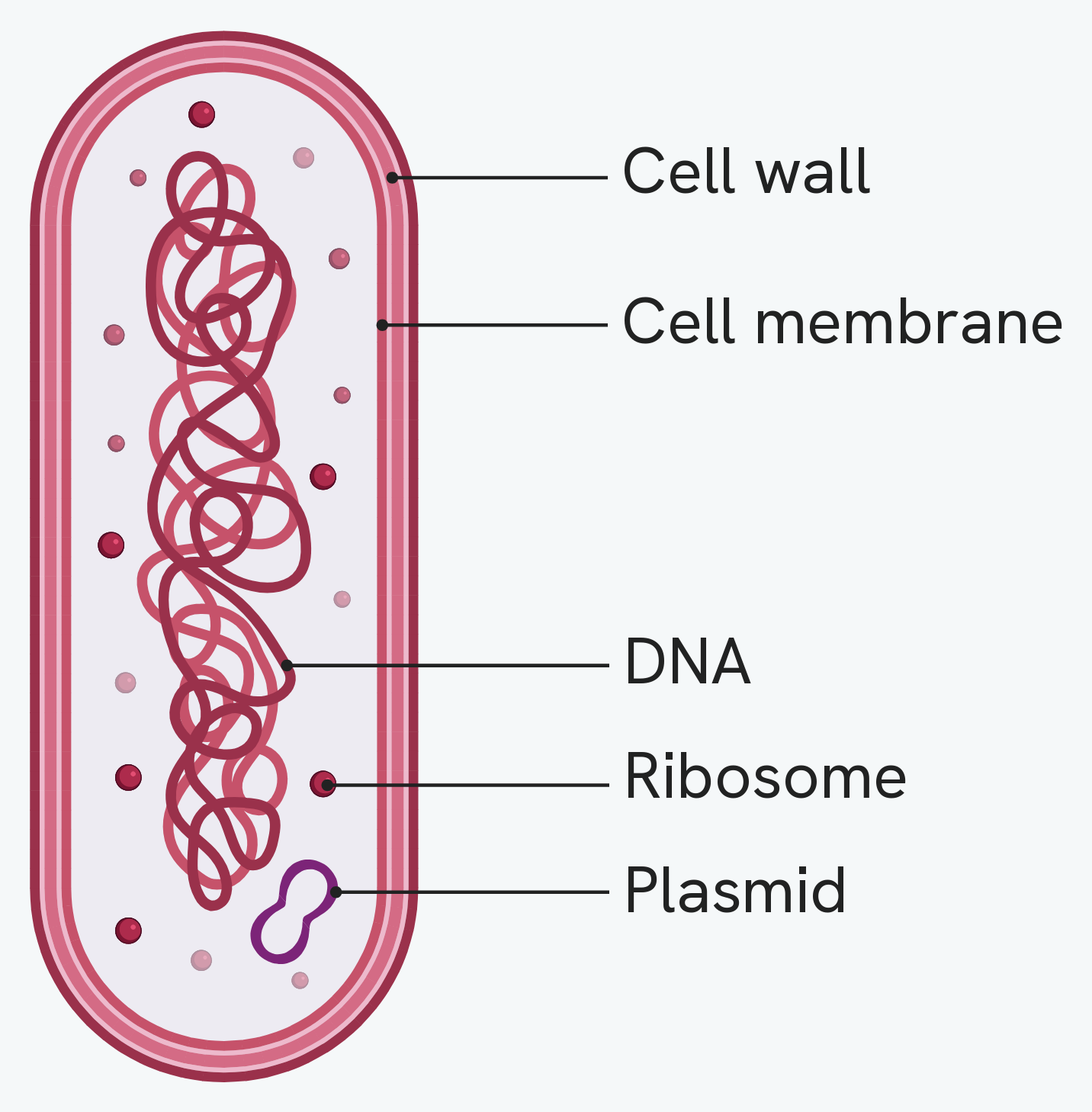
- Prokaryotic cells do not have a nucleus; their DNA is found free in the cytoplasm. Bacterial cells are prokaryotic, and they are much smaller than eukaryotic cells.
A prokaryotic cell has a single loop of DNA floating in the cytoplasm, and it may also have one or more small extra rings of DNA called plasmids.
Despite their differences, all cells share four features: DNA, a cell membrane, cytoplasm, and ribosomes.
Animal and plant cells
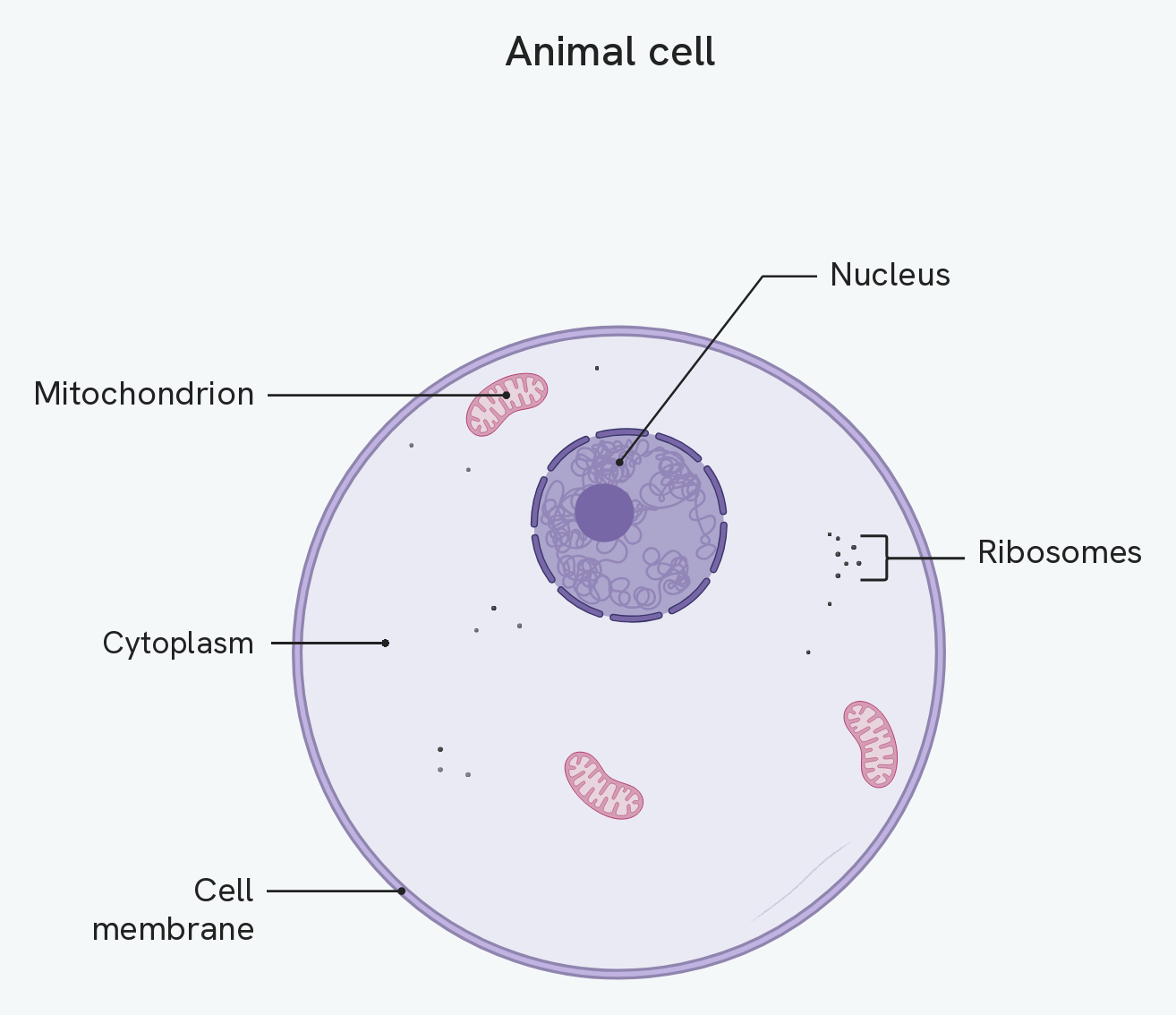
Both animal and plant cells contain the following sub-cellular structures.
| Structure | What it does |
|---|---|
| Cell membrane | Controls the movement of substances into and out of the cell |
| Cytoplasm | Gel-like substance where most of the cell's chemical reactions happen |
| Nucleus | Contains the DNA and controls the activities of the cell |
| Mitochondria | The site of aerobic respiration, which releases energy from glucose |
| Ribosomes | The site of protein synthesis |
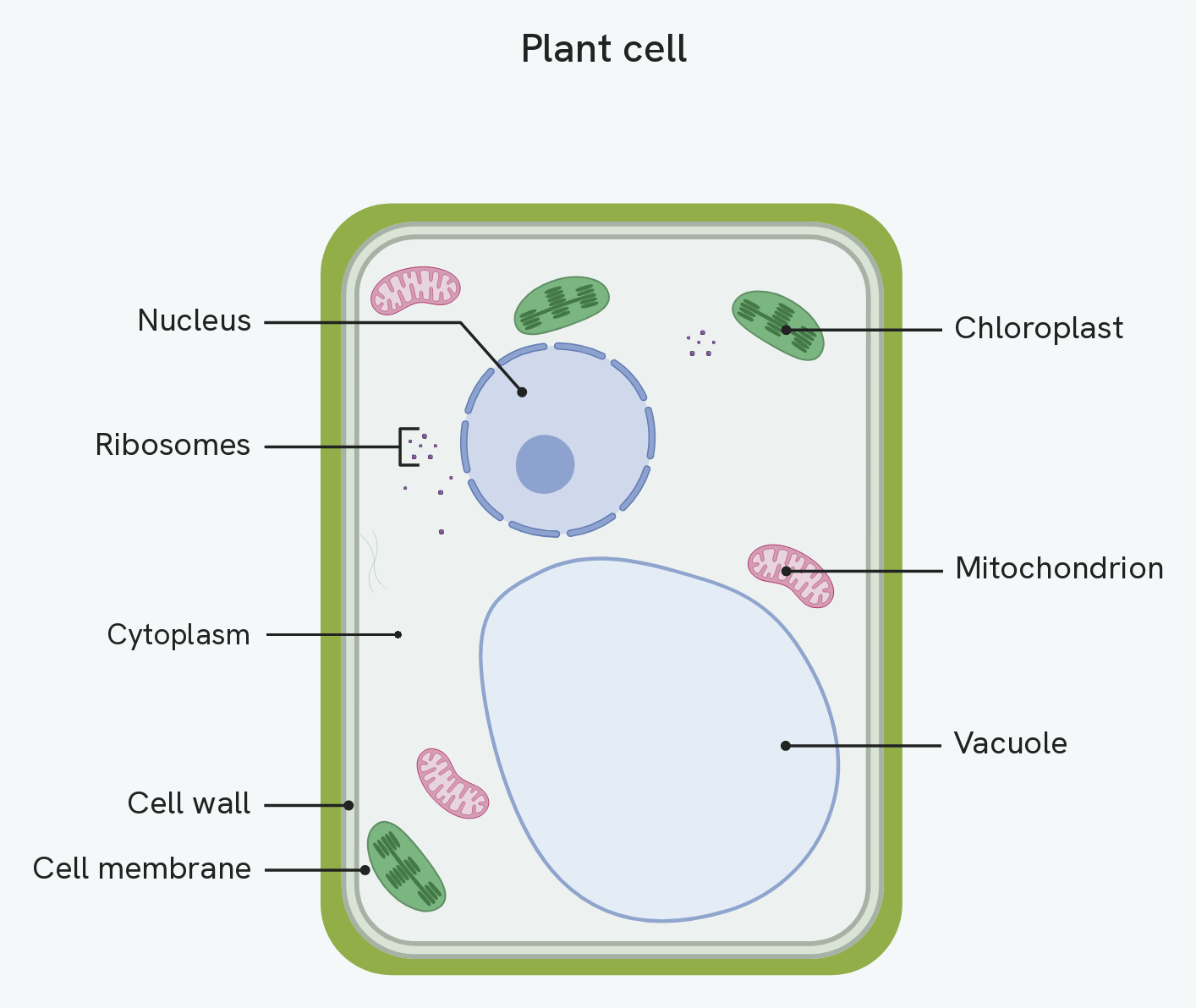
Plant cells have three extra structures that animal cells do not.
- Cell wall, made of cellulose, which strengthens and supports the cell. (Algal cells also have a cell wall.)
- Chloroplasts, which contain chlorophyll to absorb light energy for photosynthesis, making glucose.
- A permanent vacuole filled with cell sap, which helps keep the cell turgid (firm) to support the plant.
Three misunderstandings about this table cost marks every year.
Plant cells do have mitochondria. Photosynthesis makes glucose; respiration releases the energy from it. A plant has to do both, so it needs chloroplasts and mitochondria. A plant respires continuously, including at night when it is not photosynthesising at all.
Not every plant cell has chloroplasts. Root cells are underground and never see light, so they have none. Chloroplasts are concentrated in the parts of the plant that catch light, mainly the leaves.
A cell wall is not a cell membrane. Every cell has a membrane, which controls what enters and leaves. A wall sits outside the membrane and is there for support. Bacteria and plants both have walls, but only the plant wall is made of cellulose, so "bacteria have a cellulose cell wall" is wrong.
It helps to think of the structures by job rather than by name. The nucleus is the control room holding the instructions, the mitochondria are the power stations, the ribosomes are the assembly line where proteins are built, and the membrane is the door staff deciding what gets in and out.
Orders of magnitude
Cells and their parts vary hugely in size, so we compare them using orders of magnitude. An order of magnitude is a factor of ten (a power of 10).
- Something 10 times larger is 1 order of magnitude bigger (10¹).
- Something 100 times larger is 2 orders of magnitude bigger (10²).
- Something 1000 times larger is 3 orders of magnitude bigger (10³).
To compare two sizes, convert them to the same unit, write each as a power of ten, and find the difference between the powers. For example, a 10 μm amoeba is 1 × 10⁻⁵ m and a 0.1 mm egg cell is 1 × 10⁻⁴ m, so they differ by one order of magnitude.
How this fits together
Knowing the parts of a cell and what they do is the foundation of the whole topic. The next step is seeing how cells change shape to do particular jobs, which is covered in the specialised cells and differentiation guide.