AQA GCSE Biology: Specialised Cells and Differentiation
A clear GCSE Biology revision guide to specialised cells and differentiation: how sperm, nerve, muscle, root hair, xylem and phloem cells are adapted, and how cells differentiate.
Not all cells are the same. As an organism develops, its cells become specialised, each taking on a shape that suits a particular job. This guide looks at the main specialised cells you need to know, in animals and plants, and explains the process of differentiation that produces them. The key idea is that a cell's structure is matched to its function.
Specialised animal cells
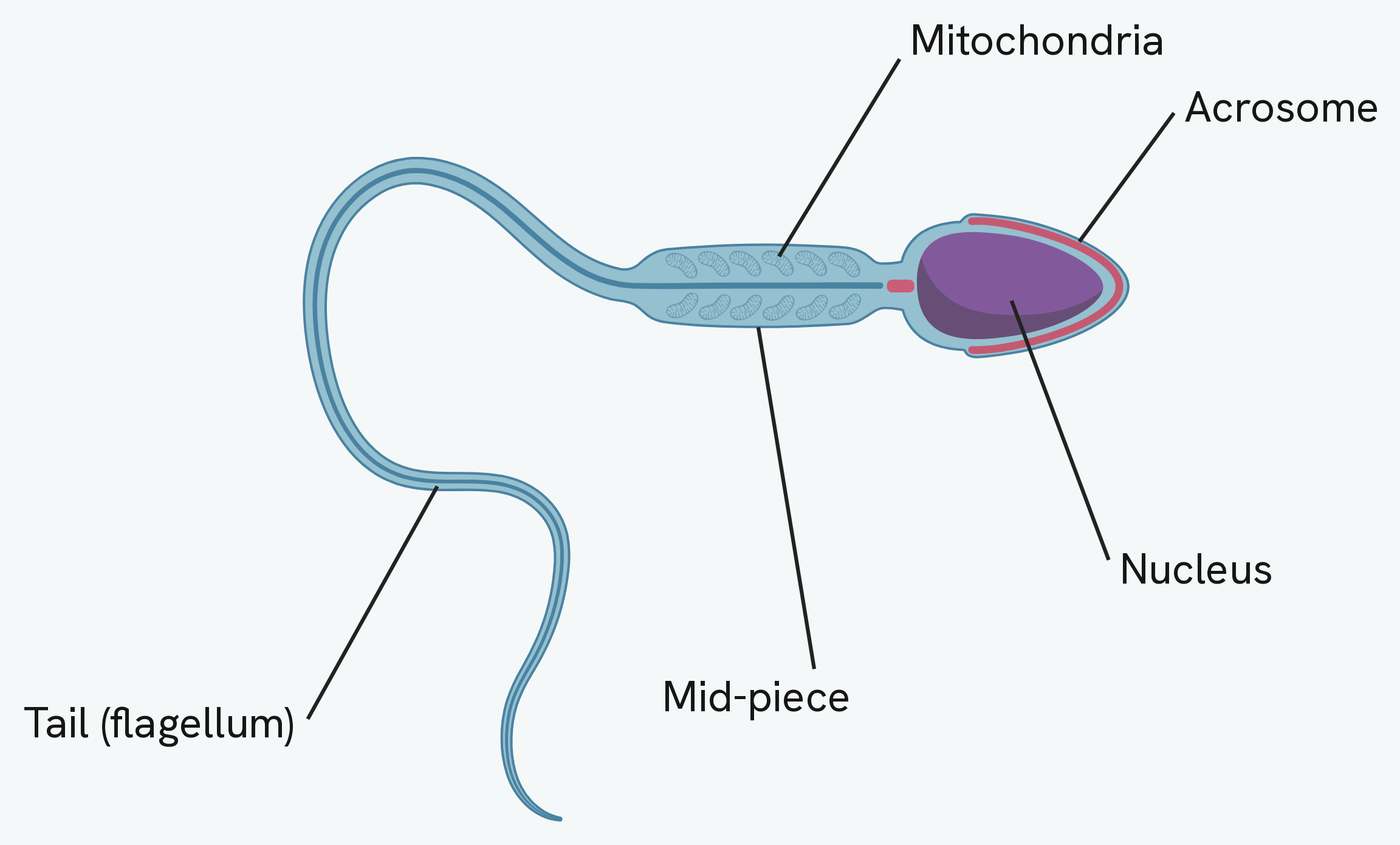
Sperm cell (function: to fertilise an egg)
- A long tail (flagellum) to swim towards the egg.
- Many mitochondria to release the energy needed for swimming.
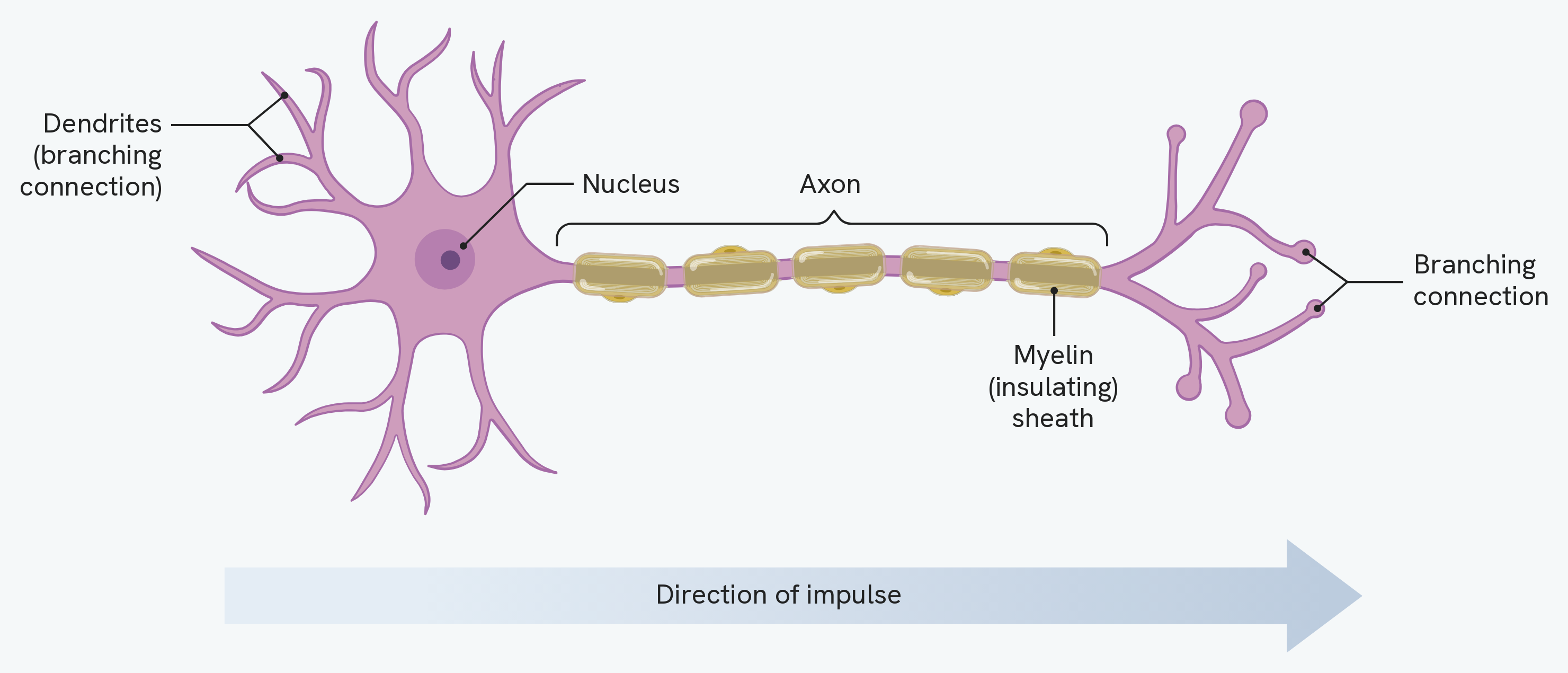
Nerve cell (function: to carry electrical impulses)
- Very long, to transmit impulses over long distances.
- Many branching connections to link up with other nerve cells.
- An insulating sheath to speed up impulse transmission.
Muscle cell (function: to contract and produce movement)
- Long protein fibres that can shorten, so the cell contracts.
- Many mitochondria to release the energy needed for contraction.
Every one of those bullet points has the same shape, and copying that shape is how you pick up marks. Each names a feature and then says what it achieves. "A sperm cell has a tail" is a description and scores nothing on its own. "A sperm cell has a tail so it can swim to the egg" is an adaptation. Whenever a question says explain how a cell is adapted to its function, write both halves of the sentence, every time.
Specialised plant cells
Root hair cell (function: to absorb water and mineral ions from the soil)
- A long hair-like projection that increases the surface area for absorbing water by osmosis.
- Many mitochondria to release energy for the active transport of mineral ions.
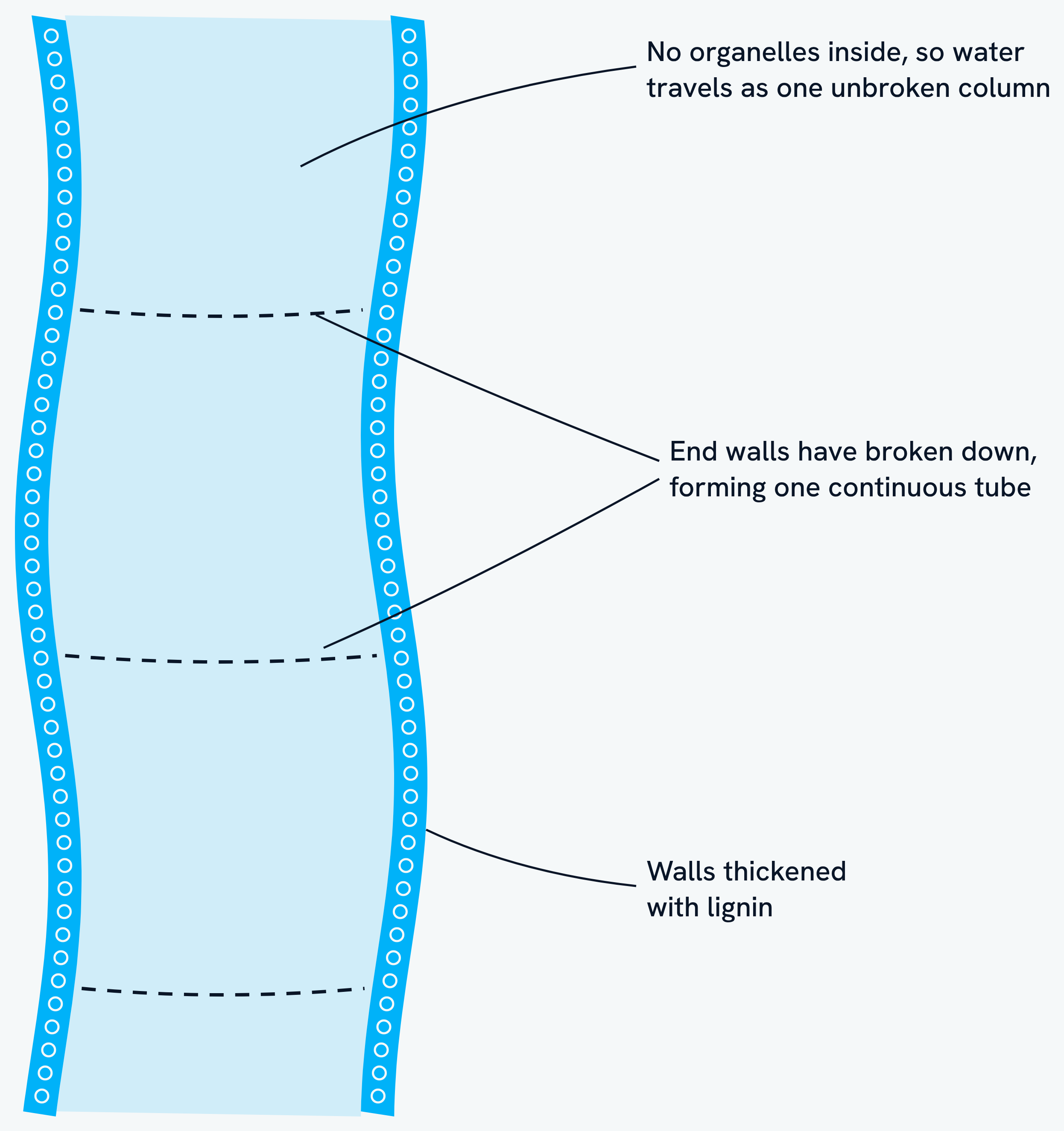
Xylem cell (function: to transport water and mineral ions from roots to leaves)
- Walls strengthened with lignin to withstand pressure.
- Hollow (no cytoplasm), so water flows through freely.
- The end walls break down to form continuous tubes.
Phloem cell (function: to transport dissolved sugars around the plant)
- No nucleus, to make more room for the movement of dissolved sugars.
- Sieve plates (pores in the end walls) that let sugars move from cell to cell.
Xylem and phloem are easy to confuse, so fix one difference and work out the rest from it. Xylem cells are dead, which is what allows them to be hollow and lignified, and they carry water in one direction only, upwards from the roots. Phloem cells are alive, which is what allows them to carry dissolved sugars in either direction, to wherever the plant needs them.
Root hair cells are worth one extra note. They have no chloroplasts, because they are underground and get no light. A question asking why a root hair cell lacks a structure found in a leaf cell is testing exactly that.
Differentiation
When a cell differentiates, it develops different sub-cellular structures so it can carry out a specific function, becoming a specialised cell.
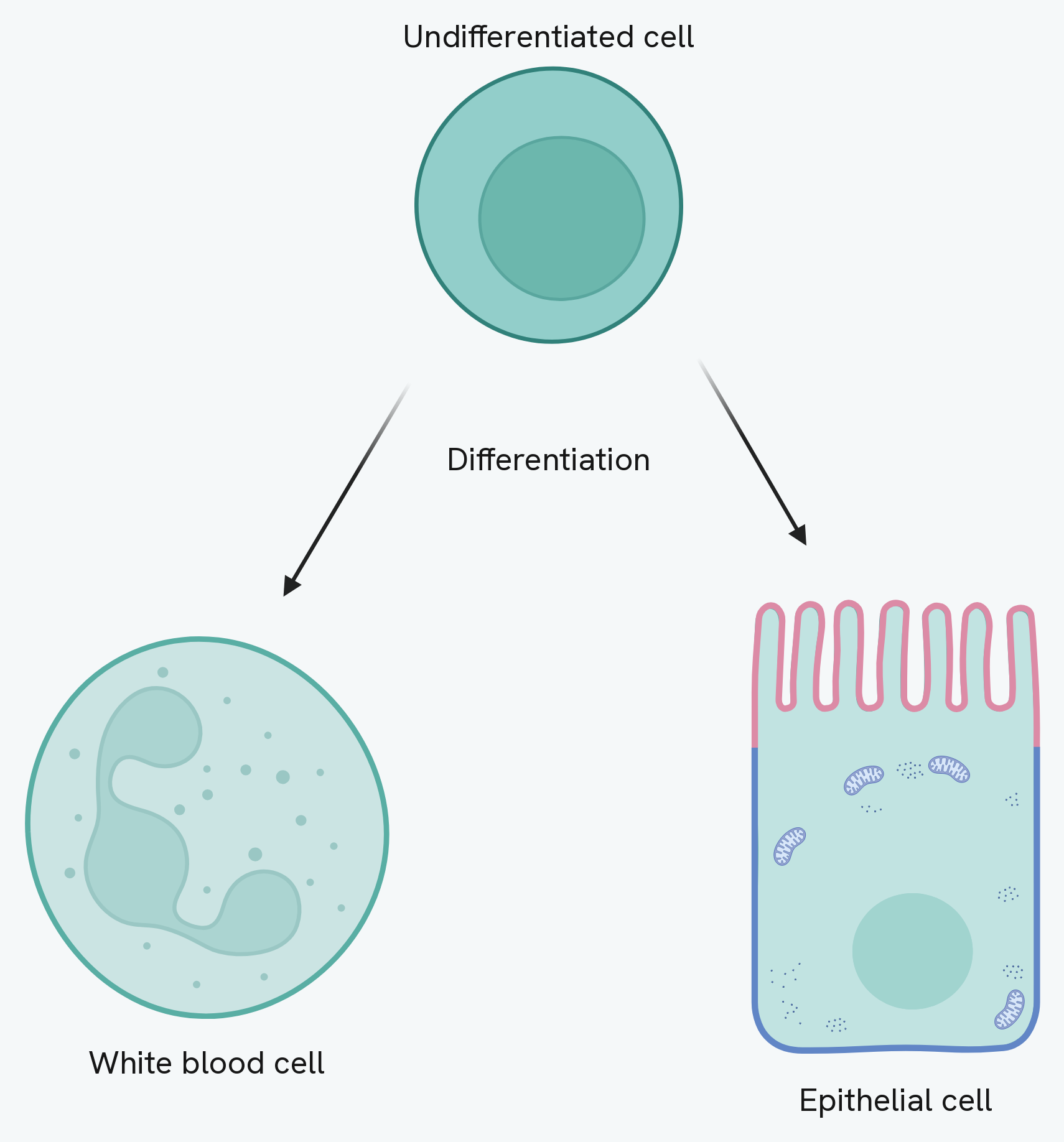
The timing of differentiation differs between animals and plants.
- In animals, most cells differentiate at an early stage during embryo development. In a mature animal, cell division is mostly limited to the repair and replacement of worn-out cells, such as new skin or blood cells.
- In plants, many cells keep the ability to differentiate throughout the plant's whole life.
Differentiation matters because, as an organism grows from a fertilised egg, its cells must specialise into the many different cell types needed to build tissues, organs and organ systems.
That difference between animals and plants has a visible consequence. A plant can be grown from a cutting, because cells in the cut stem can still differentiate into roots. No equivalent works in a mammal, which is why a lizard can regrow a tail and you cannot regrow a finger.
Differentiation is best thought of as a one-way step. Once an animal cell has specialised, it has committed to that job and will not turn into something else. That is precisely why stem cells, which have not yet committed, are so valuable in medicine.
How this fits together
Specialised cells are what a cell becomes; seeing the tiny details that make them work needs powerful magnification, which is the subject of the microscopy guide. The cells that can still turn into other types, stem cells, are covered in the stem cells guide.