AQA GCSE Biology: Stem Cells
A clear GCSE Biology revision guide to stem cells: embryonic and adult stem cells, therapeutic cloning, the medical uses and the issues, and stem cells in plants.
Stem cells are unspecialised cells that can turn into other types of cell, which makes them powerful tools in medicine. This guide explains what a stem cell is, the types found in animals and plants, how they could be used to treat disease, and the practical and ethical issues involved. The theme is potential, both the medical promise and the questions it raises.
What a stem cell is
A stem cell is an undifferentiated cell that can do two things:
- divide by mitosis to produce many more cells of the same type, and
- differentiate into certain specialised cell types.
Types of animal stem cell
- Embryonic stem cells are found in early embryos and can differentiate into any type of body cell.
- Adult stem cells are found in certain places in the body, such as the bone marrow. They can differentiate into a limited range of cell types, for example the different types of blood cell, but not into every cell type.
Using stem cells in medicine
Because they can become other cell types, stem cells could replace faulty or damaged cells.
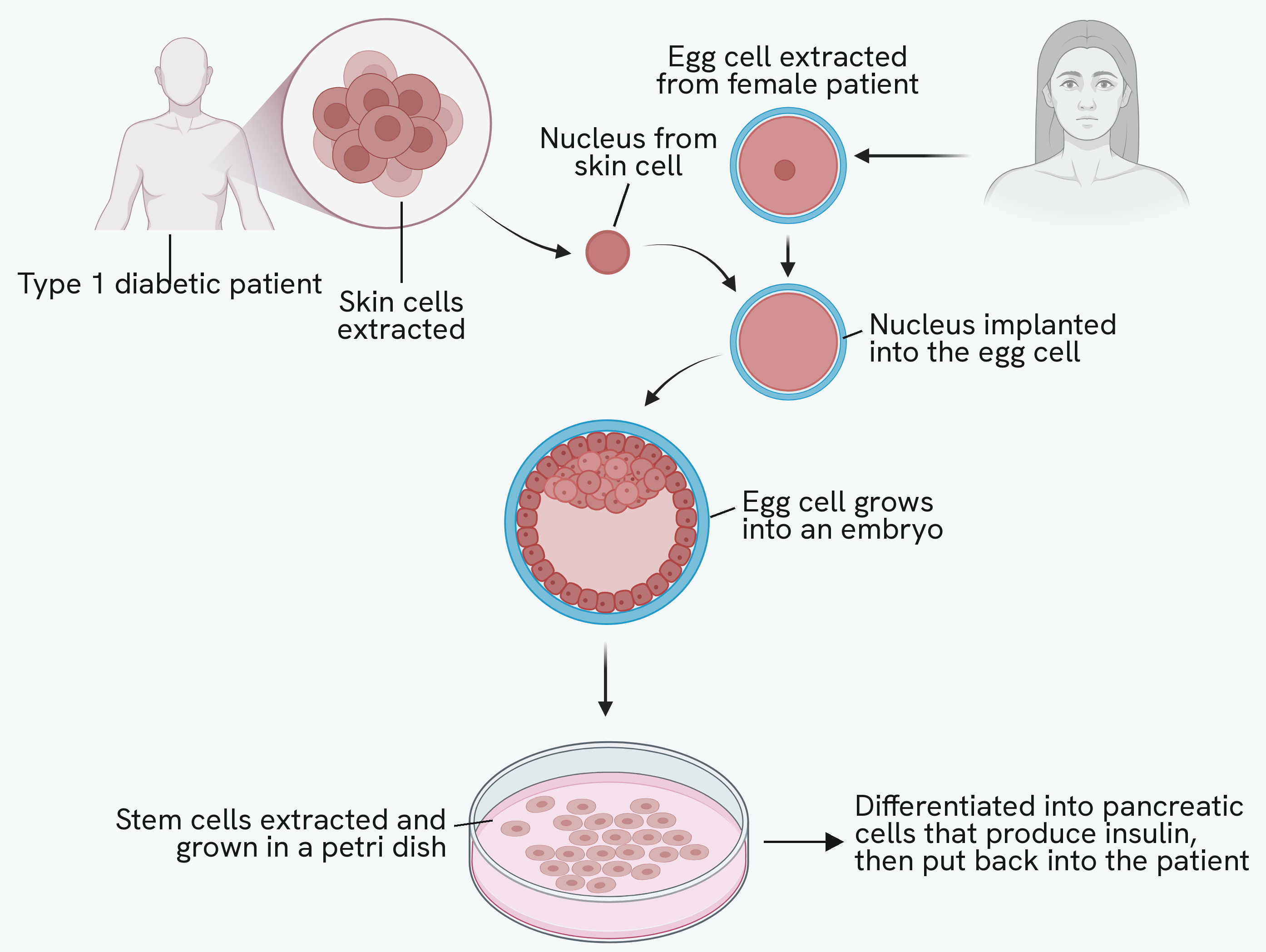
- Embryonic stem cells can be cloned and directed to differentiate into almost any cell type, then transplanted into a patient, for example to replace the insulin-producing cells lost in type 1 diabetes, or the damaged nerve cells in paralysis.
- Adult stem cells treat a more limited range of conditions, such as bone marrow transplants for blood cancers, where healthy new blood cells are needed.
Therapeutic cloning
Therapeutic cloning makes stem cells that match a patient.
- An embryo is produced with the same genes as the patient, by transferring the nucleus of one of the patient's body cells into an empty donor egg cell.
- Stem cells from this embryo can be made to differentiate into whatever cells the patient needs.
- The big advantage is that these stem cells carry the patient's own DNA, so they are much less likely to be rejected by the patient's immune system.
The issues
Using stem cells in medicine raises several concerns.
- There is a risk of passing on viral infections during the procedure.
- Transplanted cells may be seen as foreign and rejected by the immune system, so patients may need immunosuppressant drugs.
- There are ethical and religious objections: obtaining embryonic stem cells destroys human embryos, which some people regard as potential human lives, and the embryo cannot give consent.
Stem cells in plants
Plants have stem cells too, found in the meristems, the growing points in root tips and shoot tips. These can differentiate into any type of plant cell throughout the plant's life. Meristem cells can be used to produce clones of plants quickly and cheaply, for example to preserve rare species from extinction, or to grow large numbers of crop plants with useful features such as disease resistance.
How this fits together
Stem cells round off how cells divide and specialise. The rest of Topic 1 is about how substances move in and out of cells, starting with the diffusion and exchange surfaces guide.