AQA GCSE Biology: Chromosomes and the Cell Cycle
A clear GCSE Biology revision guide to chromosomes and the cell cycle: what chromosomes are, why mitosis matters, and the three stages of the cell cycle.
Cells make new cells by dividing, and the DNA has to be copied and shared out exactly each time. This guide explains what chromosomes are, why the type of division called mitosis is so important, and the three stages of the cell cycle that produce two identical cells. The key idea is that mitosis makes cells that are genetically identical to the original.
Chromosomes
Chromosomes are tightly coiled strands of DNA, found in the nucleus of a cell. Each chromosome carries a large number of genes, which are sections of DNA that code for specific proteins.
In human body cells, chromosomes come in pairs: there are 23 pairs, making 46 chromosomes in total. One chromosome of each pair is inherited from the mother and one from the father.
Exam questions regularly test whether you can keep DNA, genes and chromosomes in the right order, because they are not three different things but the same thing at three sizes. A chromosome is one very long molecule of DNA, coiled up tightly so it fits in the nucleus. A gene is a short section of that molecule. Think of the chromosome as a cookery book, each gene as one recipe in it, and the DNA as the letters the recipes are written in. You would never say a book and a recipe are separate objects, and it is the same relationship here.
The chromosomes come in pairs because each pair carries genes for the same characteristics in the same order, one copy from each parent. Body cells have the full 46. Gametes have only 23, a single chromosome from each pair, which is why they are made by meiosis rather than mitosis.
Why mitosis is important
Mitosis is a type of cell division that produces two daughter cells genetically identical to the parent cell. This matters for two reasons: it allows multicellular organisms to grow and develop, and it lets them replace worn-out or damaged cells to repair tissues.
"Genetically identical" is doing a lot of work in that sentence. Every one of your body cells came from a single fertilised egg by mitosis, so they all carry the same genes. That is what makes repair possible: a new skin cell built to replace a damaged one has to be the same as the cell it replaces, or the tissue would not work.
It also explains why mitosis has to be controlled. When cells divide uncontrollably, the result is a tumour, which is where this topic connects to cancer in Topic 2.
The cell cycle
A cell divides through a repeating sequence called the cell cycle, which has three stages.
- Interphase (preparation). The DNA replicates, so the cell has two copies of each chromosome. The cell also grows, and the number of sub-cellular structures, such as mitochondria and ribosomes, increases.
- Mitosis (nuclear division). One complete set of chromosomes is pulled to each end of the cell, and the nucleus divides into two nuclei, each with a full set of chromosomes.
- Cytokinesis (cell division). The cytoplasm and cell membrane divide, forming two genetically identical daughter cells.
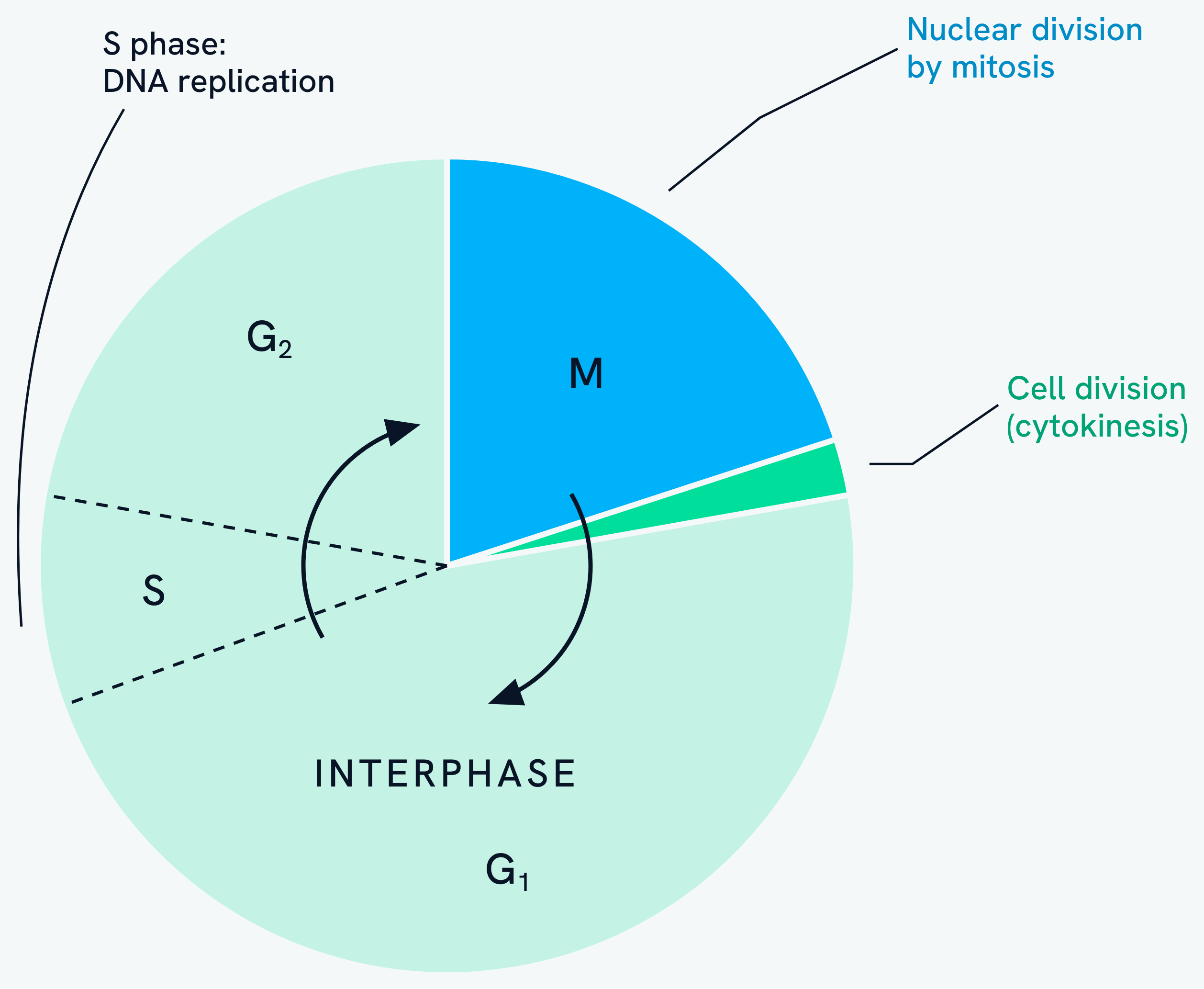
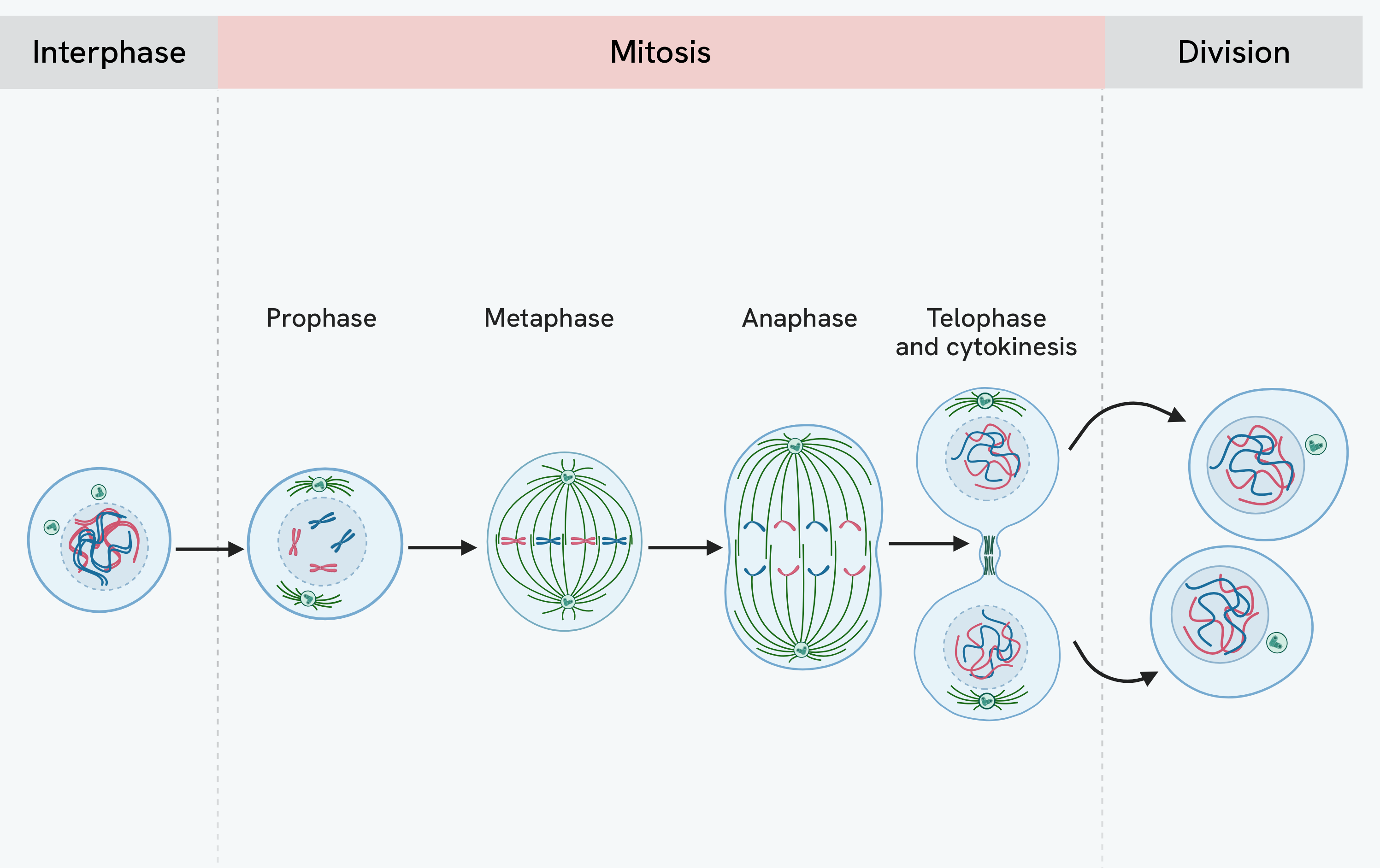
The order of those stages is the point of the whole cycle, and it is a favourite question. The DNA must be copied before the cell divides, never after. Copy first and each daughter cell gets a complete set; divide first and each would get half. It is the same reason you photocopy a document before splitting the pile between two people rather than after.
Interphase also takes up by far the most time of the three stages, which is why a slide of dividing cells shows most of them not visibly dividing at all. If a question gives you the length of each stage and asks you to work out a proportion or a percentage, that is what it is testing.
One wording trap is worth noting. Mitosis strictly means the division of the nucleus only. The cell itself is split by cytokinesis. Questions sometimes offer "mitosis" as a wrong answer for the stage in which the cytoplasm divides.
How this fits together
Mitosis produces ordinary body cells. Some cells, though, stay unspecialised and can turn into many different cell types; these are stem cells, covered in the stem cells guide.